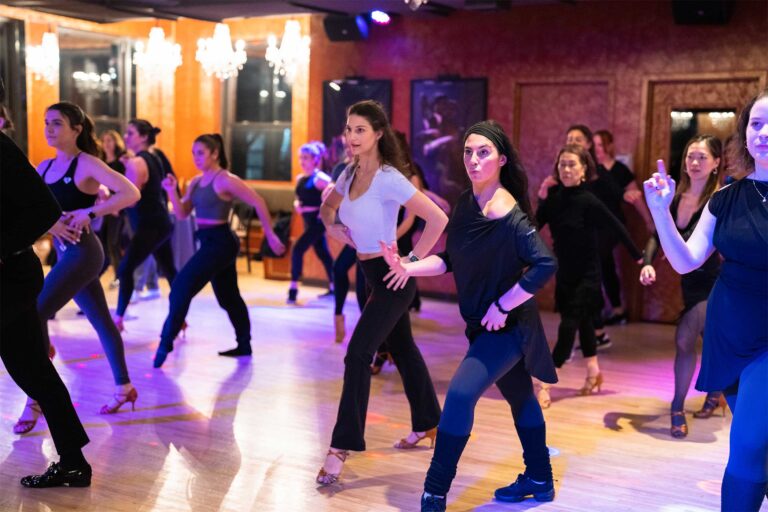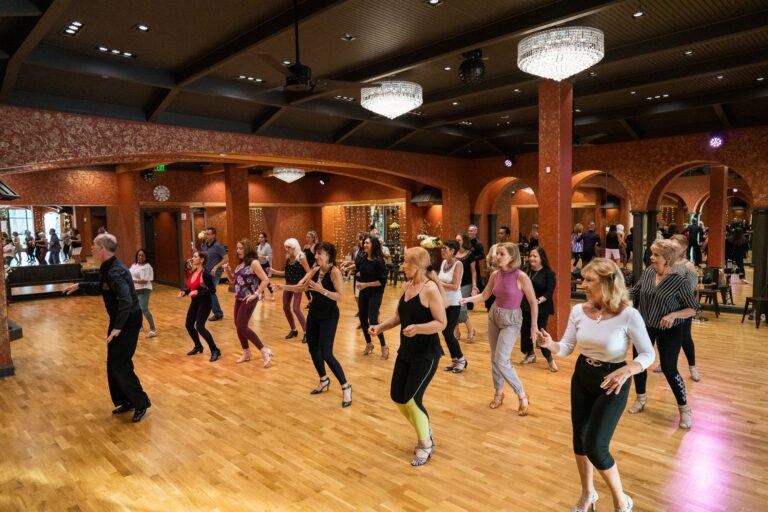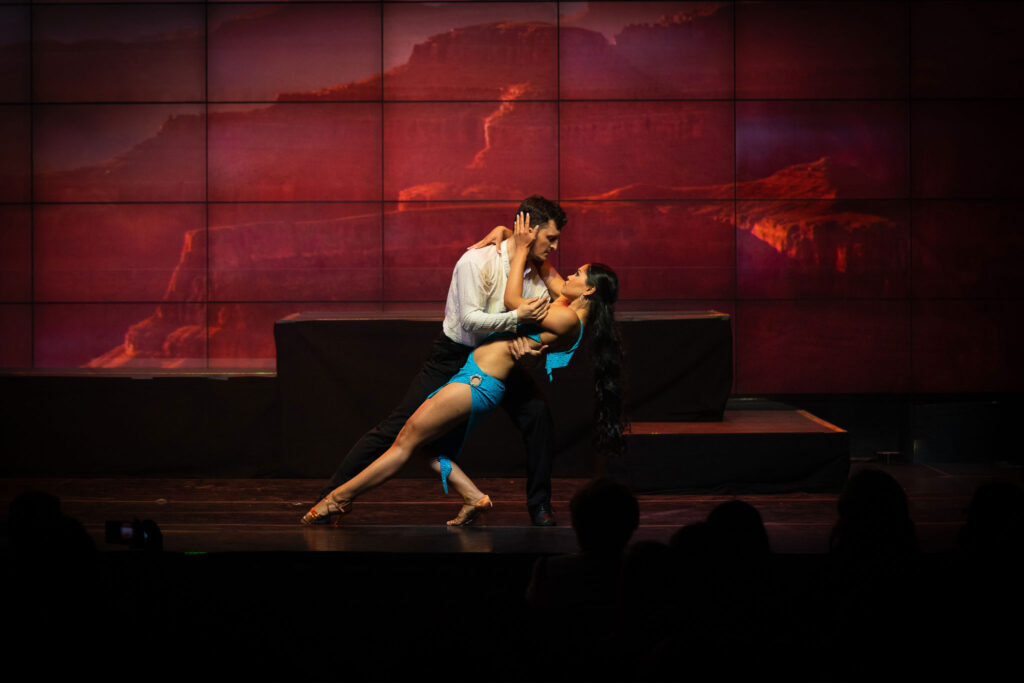
You step onto a vibrant, dimly lit social dance floor. The music starts playing, and a wave of anticipation hits you. But as you watch the couples around you, you notice something puzzling. On one side of the room, dancers are moving with rapid, joyful, and intricate footwork, keeping their hips close to the floor.
On the other side, couples are locked in a close, fluid embrace, executing dramatic body rolls and sweeping dips. You find yourself wondering: Are they even dancing to the same style of music?
Welcome to the beautiful, sometimes confusing world of modern social dancing. If you are struggling to tell these styles apart, you are not alone. Understanding the nuances of Traditional vs. Sensual Bachata is one of the most common hurdles for new dancers.
In this comprehensive guide, we will break down the history, the physical mechanics, and the musical cues of both styles.
By the time you finish reading, you will be able to identify exactly which style is being danced within the first five seconds of any song.
The Roots: Where Traditional and Sensual Bachata Began
To truly appreciate the difference between Dominican and Sensual Bachata, we must travel across time and oceans. Bachata is not a static monolith; it is a living, breathing cultural art form that has evolved dramatically from its humble origins to global festival stages.
Dominican Bachata: The Soul of Santo Domingo
What is traditional bachata called by historians and locals? It is simply called Bachata, or “Dominican Bachata.” Born in the rural countryside and working-class neighborhoods of the Dominican Republic during the early 1960s, Bachata was initially rejected by high society. For decades, it was labeled as música de amargura, the music of bitterness and sorrow.
Following the downfall of the Trujillo dictatorship, musicians poured their hearts into stories of heartbreak, poverty, and love.
The dance evolved organically in backyard parties and crowded bars. It wasn’t about formal dance studios or structured patterns; it was about the raw, authentic expression of everyday life.
This style features a rapid, lively, and syncopated rhythm, where dancers respond to the music with a natural, grounded street sway that celebrates community connection.
Cultural Milestone: In recognition of its deep cultural significance and global impact, Dominican Bachata was officially inscribed on the UNESCO Intangible Cultural Heritage of Humanity List, cementing its status as an eternal gift to world culture.
Sensual Bachata: The European Fusion
Fast forward to the early 2000s in Cádiz, Spain. A young dancer named Korke Escalona listened to the evolving sounds of Bachata and felt inspired to express the music differently.
Together with his dance partner, Judith Cordero, Korke and Judith founded what is known today as Sensual Bachata.
Rather than focusing entirely on fast feet, they looked at the slower, longer, and more melodic accents found in modern Latin pop productions. To express these emotions, they incorporated body mechanics from other partner dances.
Sensual Bachata is a direct European fusion, borrowing heavily from the dramatic styling of Argentine Tango and the deep, continuous head movements and elastic counter-balances of Brazilian Zouk. What started as a creative experiment in southern Spain quickly ignited a global phenomenon, transforming the international festival circuit.
Core Technique: Footwork vs. Body Waves
The physical difference between Dominican and Sensual Bachata comes down to where the movement originates in the body. One style anchors itself firmly to the earth, while the other channels energy through fluid, continuous waves.
Traditional Bachata Technique: Grounded and Playful
Traditional Bachata is danced with a low center of gravity, with knees slightly bent and feet firmly planted. The basic step follows a lateral or box-step pattern across an 8-count timing structure. However, instead of sticking strictly to a rigid path, traditional dancers use the basic step as a launchpad for intricate footwork, spontaneous syncopations, and playful counter-times.
The movement is driven almost entirely from the hips down. Dancers stay in an open or semi-closed position, allowing plenty of space to slide, tap, and challenge each other to rhythmic mini-battles. It is high-energy, improvisational, and focuses heavily on interacting playfully with your partner and the live energy of the instruments.
Sensual Bachata Technique: Fluid and Isolated
If traditional style is about the feet, Sensual Bachata shifts its focus from the hip up. This style relies on absolute core control, extreme flexibility, and isolated body mechanics. Dancers operate in a much closer partner connection, maintaining constant torso-to-torso contact to communicate subtle leads safely.
The hallmark movements of this style include:
- Body rolls and cascading body waves that ripple through the spine.
- Precise, liquid-like torso isolations that follow slow musical swells.
- Circular movements of the upper frame, including controlled head rolls (giros de cabeza).
- Dramatic, sweeping dips and leans that require a strong, elastic connection between partners.
Rather than stepping on every single beat, dancers often use the timing to stretch their movements across multiple counts, creating an illusion of weightlessness and continuous momentum.
The Battle of the Beats: How the Music Differs
You cannot understand the dance without understanding the band. The instrumentation determines the movement, and the arrangement dictates your style choices on the dance floor.
Traditional Instrumentation
Authentic Dominican Bachata is driven by a live, acoustic five-piece band. The heartbeat of the song rests on two primary percussion instruments: the bongo and the güira (a metal scraping instrument).
The melodic emotional weight is carried by the requinto (lead acoustic guitar) and the segunda (rhythm guitar), backed by an electric bass.
The requinto plays blindingly fast, syncopated solos. When the guitars are firing rapidly, your body naturally wants to step, tap, and play with footwork.
Sensual Instrumentation
Sensual Bachata thrives on modern adaptations often referred to as Bachata Moderna or urban remixes. These tracks feature slower tempos, heavy electronic basslines, synthesized atmospheric sounds, and smooth R&B or pop vocals.
The acoustic guitar solos are frequently replaced by sustained synthesizer notes and deep, echoing electronic beats.
These long, uninterrupted sounds provide the perfect musical canvas for slow, sweeping body rolls and deep dips.
The Real-Time Transition Framework
One of the greatest signs of an advanced dancer is musicality—the ability to adapt your style in real time to the song that is playing.
Can you dance Sensual Bachata to any song? Not exactly. To outsmart the competition on the dance floor, you need to understand the structural shifts of a track.
A single Bachata song can change flavors multiple times. Use this simple framework to guide your transitions:
- The Derecho Section (The Verse): The rhythm is steady, driving, and straightforward. This is your neutral ground. You can dance standard Bachata Moderna basics, light turns, and comfortable closed-position steps.
- The Majado Section (The Chorus/Guitar Solo): The güira switches from a scraping sound to a aggressive, rhythmic tapping, and the lead guitar goes into a fast, syncopated solo. Rule of Thumb: Stop the body rolls! This section demands that you drop your weight, create space, and use traditional footwork to match the fast tempo.
- The Mambo / Senti Section (The Drop/Swell): The instruments suddenly drop out, leaving only a sustained vocal line, a slow synth wave, or a gentle guitar chime. This is your cue to transition into Sensual mode. Capitalize on this space for slow body waves, isolated torso movements, and elegant styling.
Summary Comparison: Traditional vs. Sensual Bachata at a Glance
| Attribute | Traditional (Dominican) Bachata | Sensual Bachata |
| Origin | Dominican Republic (Santo Domingo) | Spain (Cádiz) |
| Primary Pioneers | Working-class Dominican musicians & dancers | Korke Escalona & Judith Cordero |
| Core Movement Focus | Hips, knees, and intricate footwork | Torso, spine, and smooth body rolls |
| Musical Foundation | Acoustic guitar (requinto), bongo, and güira | Synthetic beats, R&B remixes, slow pop vocals |
| Dance Framework | Open, fast-paced, playful, and improvisational | Closed, close connection, fluid, and structured |
Social Dance Floor Etiquette & Safety
Because Sensual Bachata requires deep body isolations, dips, and head movements, safety and consent are paramount. You must never force a partner into a deep dip or a head roll.
Every advanced movement requires a clear, gentle invitation from the leader and active, supportive balance from the follower. If you do not feel a secure, mutual partner connection, stick to standard steps.
Protect your partner’s spine and neck at all costs; social dancing should be an enjoyable, injury-free conversation.
FAQ: Common Questions on the Social Dance Floor
Is Sensual Bachata still considered Bachata?
Yes, it is considered a modern branch of the Bachata tree. While its technique borrows heavily from European fusions and Brazilian Zouk, it still honors the underlying 8-count rhythmic framework of Bachata music.
However, purists emphasize that acknowledging its Dominican roots is vital to keeping the cultural heritage alive.
Which style is easier for absolute beginners?
Traditional Bachata is generally easier for true beginners to pick up quickly. The basic side-to-side step and the box step are intuitive, allowing you to dance along to a song after just one class. Sensual Bachata requires a deeper foundation in core stability, partner connection, and body isolation mechanics, which can take a bit longer to master.
Is sensual bachata harder than traditional?
It depends on your personal dance background. If you have experience in contemporary dance, ballet, or Brazilian Zouk, the fluid body rolls of Sensual Bachata might feel natural. However, for most social dancers, Sensual Bachata is physically harder because it requires precise core isolation, balance, and strict adherence to partner safety protocols during dips.
Do I need a partner to start learning Sensual Bachata?
Not at all! In our dance studios, partners rotate constantly during group classes. This rotation helps you develop into a highly adaptable social dancer who can read leads and cues from anyone on the dance floor.
What is the main difference between dominican and sensual bachata?
The core difference lies in the focal point of the movement and the music. Dominican Bachata focuses on intricate footwork, rapid rhythms, and hip actions driven by traditional acoustic instruments. Sensual Bachata focuses on fluid torso isolations, body waves, and close embraces choreographed to slower, modern, or remixed pop music.
Conclusion: Which Style Should You Choose?
When deciding between Traditional vs. Sensual Bachata, the ultimate answer is simple: You shouldn’t choose just one.
Limiting yourself to a single style restricts your growth and means missing out on half the fun when a song changes tempos on the dance floor. The most accomplished modern social dancers are versatile. They can switch seamlessly between fast, energetic Dominican footwork during an intense guitar solo and smooth, mesmerizing body waves when a beautiful, slow chorus hits. By mastering both styles, you become a complete, well-rounded dancer who is ready for any song and any partner.
To see these contrasting rhythmic variations and visual dynamics in action on a real dance floor, check out this instructional demonstration:
Find the Best Bachata Classes Near You
Select your closest Dance With Me studio below to claim your introductory lesson and start your dancing journey today.