
If you have ever watched a couple glide across a ballroom floor with flawless elegance and thought, “I could never do that, I have two left feet,” here is a secret: every master dancer started exactly where you are right now.
Ballroom dancing is not an innate talent; it is a series of simple, repeatable patterns. Whether you are prepping for a wedding, looking for a high-energy hobby, or wanting to boost your social confidence, stepping into a dance studio is one of the most rewarding moves you can make.
What is the Easiest Ballroom Dance for Beginners?
If ballroom dancing had a universal welcome mat, it would be The Waltz or The Foxtrot.
For absolute beginners, The Waltz is widely considered the easiest ballroom dance to learn. It uses a clean, predictable $3/4$ time signature (Count: 1, 2, 3… 1, 2, 3…) and repeats a fundamental spatial geometry known as the Box Step. Because the tempo is slow and steady, it gives your brain plenty of time to communicate with your feet before your next move.
If you prefer a more contemporary, jazz-era feel, The Foxtrot is another incredibly forgiving alternative. It relies on a simple “slow-slow-quick-quick” walking rhythm that mimics natural body movement, making it highly intuitive.
How To Ballroom Dance: The 10 Basic Steps in Ballroom Dance
Before you build complex choreography, you need to master the alphabet of movement. These 10 foundational steps and patterns span across the most popular smooth and Latin ballroom styles.
-
1. The Box Step (Waltz): The absolute bedrock of smooth dancing. You step forward, to the side, close your feet together, then step backward, to the side, and close.
-
2. The Forward Progressive Step (Foxtrot): A steady, gliding walk across the floor that teaches you how to manage your weight changes seamlessly.
-
3. The Rock Step (East Coast Swing / Rumba): Shifting your weight to a back foot and immediately rocking it back to the front foot. This step creates momentum.
-
4. The Side Chassé (Cha-Cha): A rapid series of three steps to the side (step, close, step) that adds an upbeat, syncopated rhythm to your movement.
-
5. The Basic Forward & Back (Rumba): Similar to the box step, but tracking along a straight tracking line, moving forward and back with a signature slow, sensual rhythm.
-
6. The Corte (Tango): A dramatic, structural step where the leader steps back and lowers their center of gravity slightly, creating that iconic, sharp Tango profile.
-
7. The Promenade Walk (Tango / Foxtrot): A step where both partners open up their frames slightly to look and walk in the same direction side-by-side.
-
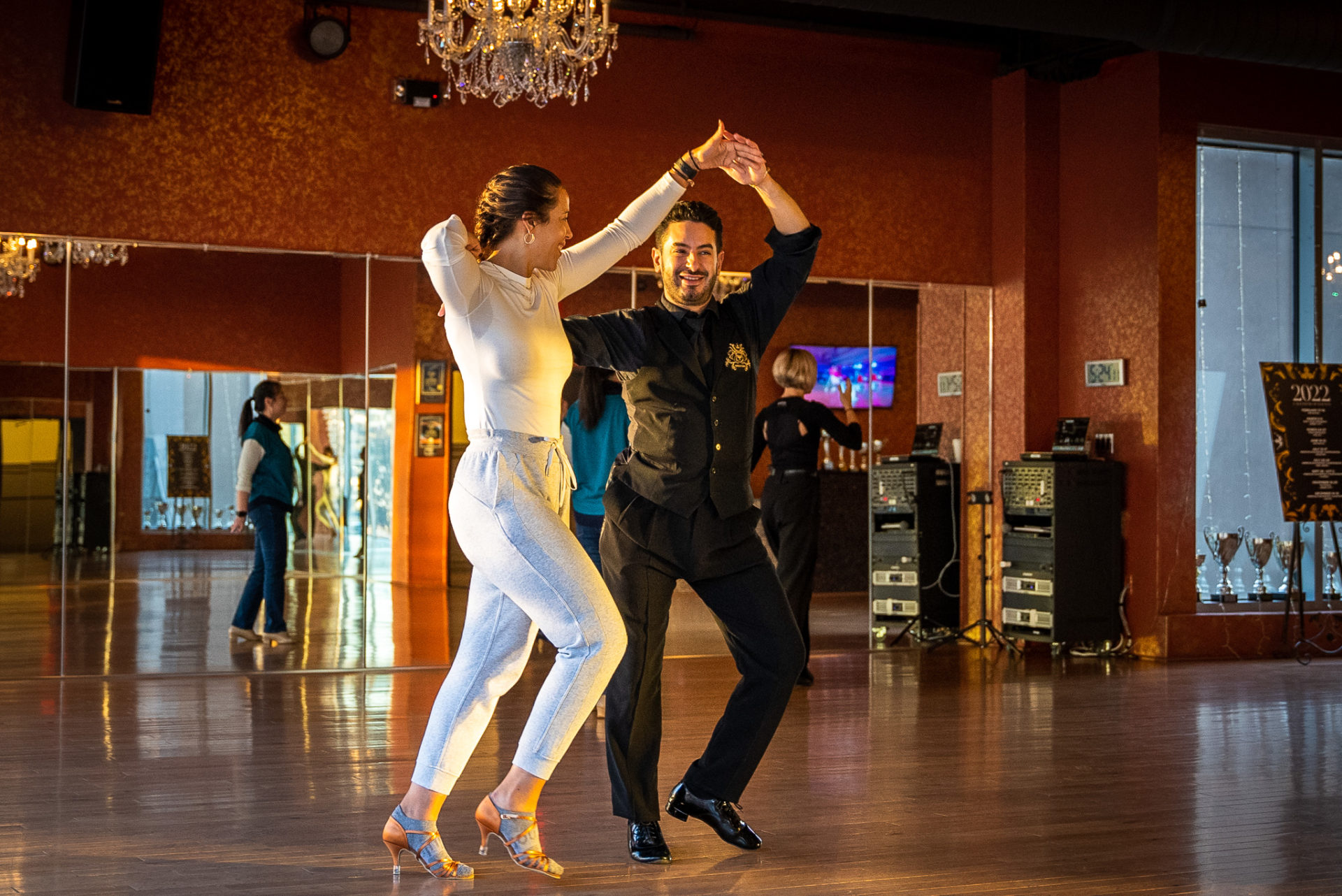
8. The Underarm Turn: The classic beginner “spin.” The leader raises their hand to invite the follower to turn comfortably beneath the arm frame.
-
9. The Cuban Hip Motion: A fundamental technique for Latin ballroom where bending and straightening alternate knees naturally moves the hips.
-
10. The Frame Hold: While not a foot movement, mastering the connection between your arms and core is the ultimate physical step required for clear lead and follow communication.
Visualizing Your Very First Step: The Waltz Box
Look closely at the movement tracking below. Notice how the steps mirror a perfect geometric square on the dance floor. This repeating sequence builds physical muscle memory remarkably fast.
Health Spotlight: Is Ballroom Dancing Good for Parkinson's Disease?
Beyond the social fun, ballroom dance doubles as a powerful therapeutic tool. Clinical research shows that ballroom dancing is incredibly beneficial for individuals managing Parkinson’s disease.
Parkinson’s often disrupts the brain’s internal rhythm generator, leading to balance issues or gait freezing. Ballroom styles like the Waltz, Foxtrot, and Tango introduce external, strong rhythmic auditory cues (the music) that help the brain bypass those disrupted neural pathways.
The Neurological Benefit: Learning complex physical sequences requires high cognitive focus, while the physical partner work demands constant balance adjustments. This combination promotes neuroplasticity—helping the brain form new connections to improve posture, stride length, and spatial awareness.
Finding the Best Local Experience: Your Blueprint
Select your closest Dance With Me studio below to view local schedules and claim your introductory offer:
Dance Studios in New York:
Dance Studios in New Jersey:
Dance Studios in in Texas:
- Dance Studio in Austin
- Dance Studio in Southlake
- Dance Studio in Houston
- Dance Studio in The Woodlands
- Dance Studio in Fort Worth
- Dance Studio in Katy

