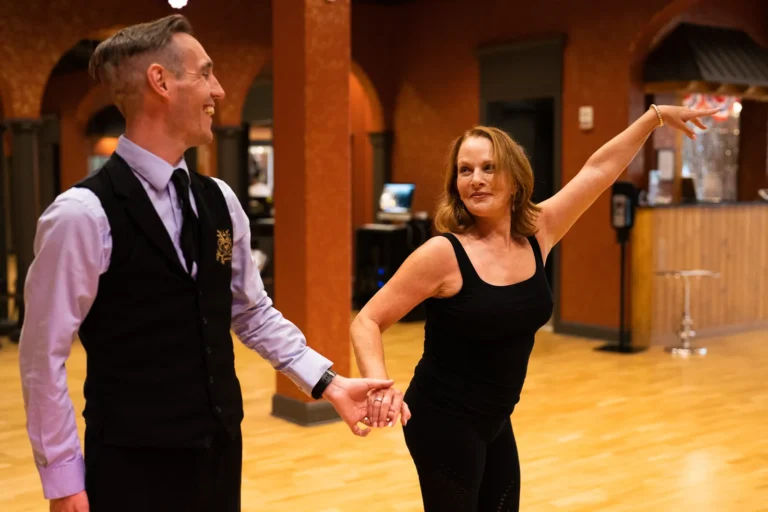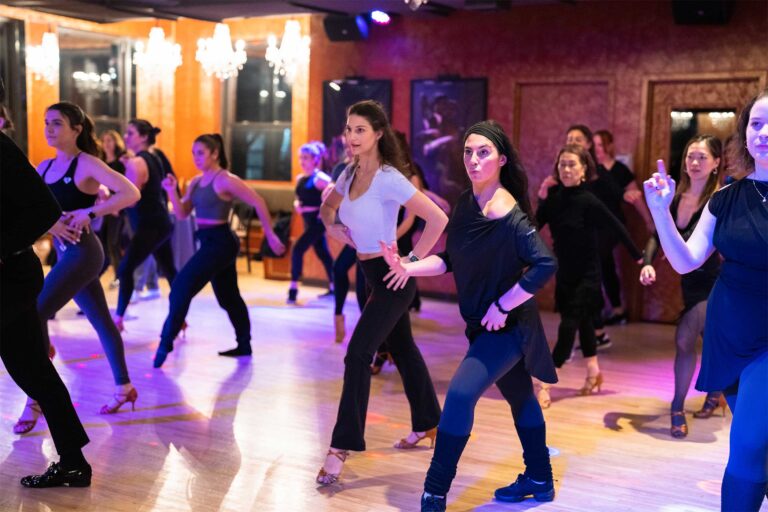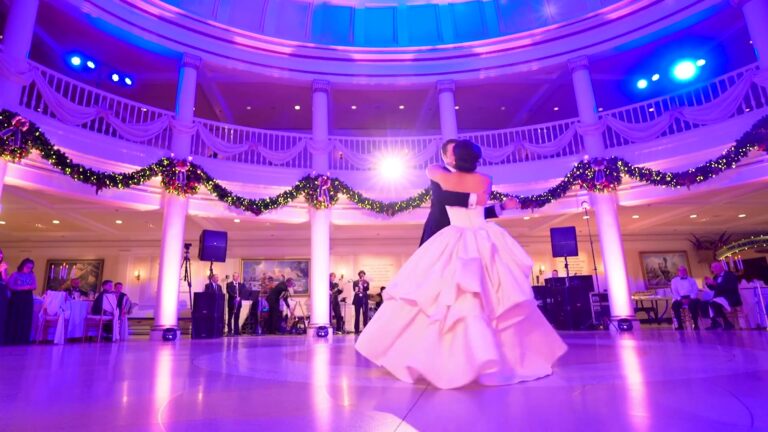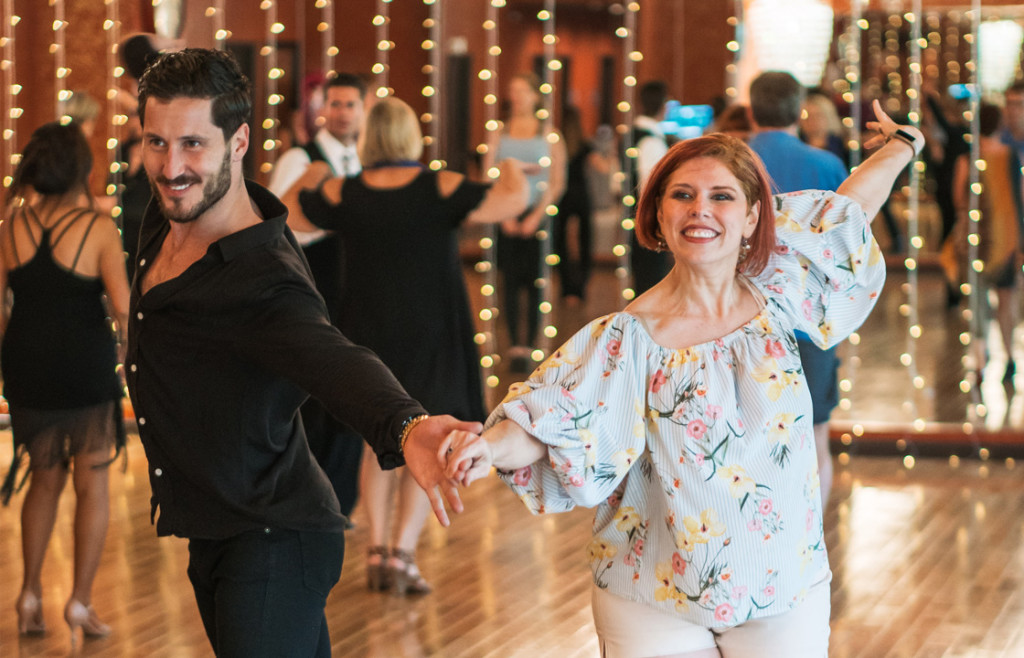
We dance because the human brain is built to move to a beat, because moving in sync with other people makes us feel bonded and lifts our mood, and because dance says things words cannot. People dance for seven main reasons: expression, connection, joy, health, celebration and memory, identity and culture, and romance. Science explains part of it. The rest is something every dancer already knows the moment the music starts.
As a choreographer and writer (though I confess I am far more comfortable to claim the former than the latter), I get asked to share my opinion about a myriad of dance related topics from the practical:
“How can dance help you get in shape?”
“What is the best way to practice my footwork?”
“What are the three most important partnering techniques I should learn?”
To the existential:
“Is my dancing a projection of my self-image?”
“How can dancing improve relationships?”
“Can dancing help you overcome fear?”
All good questions with good answers to be certain, but today I want to answer, or at least try to answer, the question I get asked most often. The question I think matters most…
Why do we dance?
We dance because it feels good, it connects us to other people, and it lets us express emotions that are hard to put into words. Researchers point to three roots: a brain wired to sync movement with sound, a social reward system that releases feel-good chemicals when we move together, and a long cultural history of using dance to celebrate, mourn, court and belong.
None of those reasons require talent. Every culture on earth has some form of dance, and most people tap a foot to music without deciding to. The question is less “why do some people dance” and more “why does anyone stop.”
Key Takeaways
- Humans dance because our brains link hearing a beat with moving the body, a trait we share with only a few other species, such as parrots.
- A 2015 Oxford study of 264 young people found that dancing in sync with a group raised pain thresholds, a sign of endorphin release, and increased feelings of closeness to the group.
- Babies between five months and two years old move rhythmically to music more than to speech, according to a 2010 study in the Proceedings of the National Academy of Sciences.
- Evidence of dance is very old: rock paintings at India’s Bhimbetka shelters, a UNESCO World Heritage Site, show people dancing in scenes dated as far back as about 10,000 BCE.
- The most common reasons adults start dancing are practical (a wedding, fitness, meeting people), but the reasons they keep dancing are emotional: confidence, connection and joy.
What are the main reasons people dance?
People dance for seven core reasons, and most dancers would name several at once. The table below sums up each reason and what is actually happening when you feel it.
| Reason | What’s happening |
|---|---|
| 1. Expression | Movement carries emotion that words can’t, from joy at a wedding to grief at a memorial. |
| 2. Connection | Moving in sync with others builds trust and closeness, fast. |
| 3. Joy | Music with a beat activates the brain’s reward and movement systems together. |
| 4. Health | Dance is cardio, balance, coordination and memory training in one activity. |
| 5. Celebration and memory | First dances, quinceañeras and family parties tie dance to life’s biggest moments. |
| 6. Identity and culture | Salsa, tango, swing and folk dances carry the history of the people who made them. |
| 7. Romance | Partner dancing has been a way to meet, flirt and fall in love for centuries. |
1. To express what words can’t
Dance is a way to show emotion with the whole body. A slow waltz can say tenderness, a tango can say tension, and a jive can say pure, silly happiness, without a single word. That’s why dance shows up at the moments when speech fails us: weddings, funerals, reunions and victories.
2. To connect with other people
Dancing with others is one of the fastest ways humans build a sense of “us.” Partner dances add a second layer: you learn to read another person’s intention through a hand on the shoulder or a shift of weight, a skill many couples say carries over into how they communicate off the floor.
3. Because it makes us happy
Dance combines music, movement and social contact, three things the brain rewards on their own. Put together, the effect stacks, which is why people often leave a lesson in a better mood than they arrived, even after feeling clumsy the whole time.
4. To stay healthy, body and mind
Dance builds cardiovascular fitness, balance, posture and coordination, and learning choreography gives memory a workout. Unlike a treadmill, it rarely feels like exercise while you’re doing it, which is a big reason people stick with it.
5. To celebrate and to remember
Dance marks milestones. A first dance at a wedding, a father-daughter dance, a family line dance at a reunion: these become the memories people replay for decades. Dancing a song from your youth can bring back a whole era in three minutes.
6. To belong to a culture
Every style carries a story. Salsa grew out of Cuban rhythms in New York City, tango was born in the port neighborhoods of Buenos Aires and Montevideo, and swing came out of Harlem ballrooms. Learning a dance is a way to join that story. (Read more in our history of salsa dance.)
7. For romance
Partner dance has long been a socially accepted way to get close to someone. Today, plenty of couples use weekly lessons as a standing date night, and plenty of singles meet their partners on a social dance floor.
Why do humans dance at all? What science says
Humans dance because our brains tightly link hearing with movement. Neuroscientist Aniruddh Patel’s “vocal learning” theory proposes that species able to imitate complex sounds, like humans and parrots, also have the brain wiring to move to a beat, which helps explain why a cockatoo can bob in time and most dogs and monkeys cannot.
Three findings stand out:
- We are born with it. In a 2010 study published in PNAS, researchers Marcel Zentner and Tuomas Eerola found that infants aged five months to two years moved rhythmically more to music than to speech, and the babies who synced better with the beat smiled more.
- It is ancient. The Bhimbetka rock shelters in central India contain paintings of people dancing, with the earliest scenes dated to roughly 10,000 BCE.
- Genes may play a role, but the story is often told wrong. A widely shared claim says a 2006 study proved dancers have higher serotonin levels. The actual study, by Rachel Bachner-Melman and colleagues, was published in PLoS Genetics in 2005. It compared 85 professional dancers with competitive athletes and found differences in two genes, AVPR1a and SLC6A4, which are linked to social communication and the serotonin system. It analyzed genes, not serotonin levels in the blood.
Why does dancing with other people feel so good?
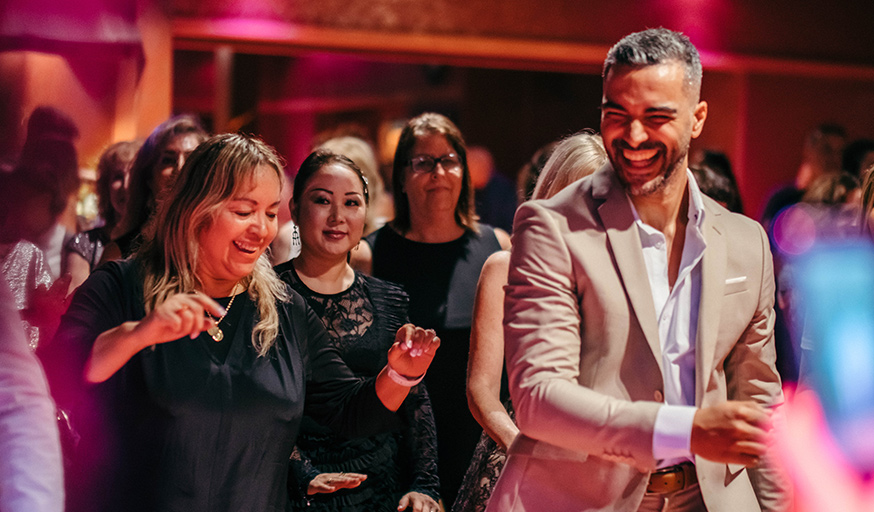
Dancing with others feels good because synchronized movement and physical effort both trigger the body’s endorphin system, which eases pain and builds a sense of bonding. In a 2015 study published in Biology Letters, Bronwyn Tarr, Robin Dunbar and colleagues at the University of Oxford had 264 young people in Brazil dance in small groups. Dancing in sync and dancing with high energy each raised pain thresholds and feelings of closeness, and the strongest effect came from doing both at once.
Sociologist Émile Durkheim had a name for this more than a century ago: “collective effervescence,” the electric, almost euphoric feeling of a group moving with one purpose. Anyone who has been to a packed social dance, a wedding reception or a line dance at a family party has felt it.
The energy of the people around you matters too. This short clip from our instructors explains why:
[Embed YouTube Short: xS5f9SRxS0k, “The Energy You’re Around Affects Your Health Too!”]
Is dancing good for your brain?
Yes. Dancing challenges memory, timing, spatial awareness and coordination at the same time, which is why researchers study it as brain training. In a well-known 2003 study in the New England Journal of Medicine, Joe Verghese and colleagues followed 469 adults over age 75 for a median of 5.1 years. Dancing was among the leisure activities linked to a lower risk of dementia, while the group’s overall physical-activity score was not.
Researchers have also studied partner dance as therapy. Argentine tango, for example, has been the subject of a 2015 systematic review and meta-analysis on balance and mobility in people with Parkinson’s disease. Dance is not a medical treatment, but the research points in a consistent direction: it is one of the most brain-engaging forms of movement people can do.
A choreographer’s answer: dance as a translator for the human heart
Science explains the mechanics, but it doesn’t quite explain the feeling. When this page was first published in 2015, David Thomas Moore, Dance With Me’s Artistic Director and Resident Choreographer and co-writer of the stage show Sway: A Dance Trilogy, wrote an answer that readers still quote:
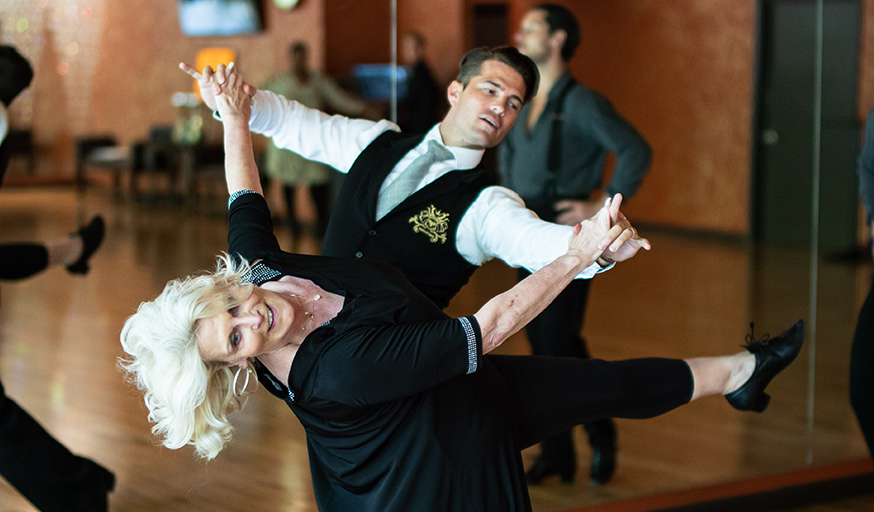
Perhaps dance is the way we express ourselves when words are insufficient. The joy we feel over new found love, the determination we have in the face of great sorrow or adversity, the passionate fire of our youth and the peacefulness of our softer and more graceful years: maybe they are never expressed more fully than through a waltz, or a tango, or a jive.
Maybe dance is simply a translator for the human heart.
When we dance, we can remember them all a little better, feel the butterflies once again, and if only for a moment, return to the purest part of our lives when time was of no matter… for we were dancing.
Why do we dance? Every answer will be different, and that is as it should be. Perhaps the better question is, “Why would we not?”
Why do adults start dancing lessons?
Most adults start dancing for a specific, practical reason and stay for the way it makes them feel. At our studios, the most common starting points are an upcoming wedding, wanting a new kind of workout, looking for a social life outside work, or a couple wanting something to do together.
| If your reason is… | A good place to start |
|---|---|
| A wedding or event | Private lessons with a set number of weeks |
| Meeting people | Group classes plus weekly social dance parties |
| Fitness | Salsa, swing or cha cha for higher energy |
| Date night | Private lessons as a couple |
| Pure curiosity | A $49 intro lesson to try a few styles |
Not sure which format fits you? Our guide to private lessons vs. group classes breaks it down, and our ranking of the easiest ballroom dances for beginners tells you where to begin. You can browse every style on our types of dances page.
Frequently Asked Questions
Why do people dance?
People dance to express emotion, connect with others, feel joy, stay healthy, celebrate milestones, connect with their culture and find romance. Most dancers name several of these reasons at once, and the reasons often change the longer someone dances.
Why do humans love to dance?
Humans love to dance because music with a beat engages the brain’s movement and reward systems at the same time. Dancing in sync with other people also raises pain thresholds, a sign of endorphin release, and increases feelings of closeness to the group.
Is dancing an instinct?
Dancing appears to be at least partly instinctive. A 2010 study in the Proceedings of the National Academy of Sciences found that babies aged five months to two years moved rhythmically more to music than to speech, before anyone taught them how.
How long have humans been dancing?
Humans have been dancing for at least several thousand years. Rock paintings at the Bhimbetka shelters in India show people dancing, with the earliest scenes dated to about 10,000 BCE, and many researchers believe dance is far older than any surviving evidence.
What are the benefits of dancing?
Dancing improves cardiovascular fitness, balance, posture, coordination and memory, and it is a reliable mood booster. Because it is social, dancing also builds friendships and confidence, which is a big reason people keep coming back.
Do I need a partner to start dancing?
No, you don’t need a partner to start dancing. At Dance With Me, you can take private lessons with an instructor or join group classes where students rotate partners, so you can come alone and still dance with others from the first day.
Find your reason to dance
Every dancer’s answer to “why we dance” is different, and you won’t know yours until you try. The hardest step is the first one: picking up the phone or walking through a studio door. After that, the steps on the floor come easier than you’d think.
Sources
- Tarr, B., Launay, J., Cohen, E. and Dunbar, R. (2015). Synchrony and exertion during dance independently raise pain threshold and encourage social bonding. Biology Letters. University of Oxford summary
- Zentner, M. and Eerola, T. (2010). Rhythmic engagement with music in infancy. PNAS. University of York summary
- Verghese, J. et al. (2003). Leisure activities and the risk of dementia in the elderly. New England Journal of Medicine. Abstract
- Bachner-Melman, R. et al. (2005). AVPR1a and SLC6A4 gene polymorphisms are associated with creative dance performance. PLoS Genetics. Abstract
- American Psychological Association (2010). Dance, dance evolution. Monitor on Psychology. Article
- Bhimbetka rock shelters, UNESCO World Heritage Site. Overview