
What Are the Different Styles of Ballroom Dance?
By Val Chmerkovskiy
Partner, Trainer & Coach, Dance With Me
14-time U.S. National Latin Champion (Junior, U21/Youth, Adult Amateur)
First American to win the IDSF Junior and Youth World Championships
Blackpool Open U21 winner · 2× Dancing with the Stars Mirror Ball winner
Last updated: August 25, 2026
Ballroom dance is organized into two systems — American Style and International Style — which divide into four competitive categories containing 19 dances. American Style splits into Smooth (Waltz, Tango, Foxtrot, Viennese Waltz) and Rhythm (Cha Cha, Rumba, East Coast Swing, Bolero, Mambo). International Style splits into Standard (Waltz, Tango, Viennese Waltz, Slow Foxtrot, Quickstep) and Latin (Samba, Cha-Cha-Cha, Rumba, Paso Doble, Jive).
The split is historical: American Style developed in US social ballrooms and allows partners to separate, while International Style was codified in Britain for competition and holds a fixed frame. At Dance With Me we teach both, following syllabi endorsed by DVIDA, the NDCA and the ISTD.
American Style vs. International Style
One difference matters more than all the others: American Style permits partners to break apart. International Style does not.
In American Smooth, the frame opens. Partners release into underarm turns, dance side by side, separate to arm’s length and come back together. Choreography can travel across the floor and then stop for a solo passage. It looks theatrical because it is — this is the style Fred Astaire and Ginger Rogers put on film, and the style most American social studios teach.
In International Standard, the closed hold is maintained from the first bar to the last. Body contact is constant, the frame never releases, and every figure is built inside that constraint. International Latin allows separation, but follows a tighter technical syllabus than American Rhythm, with straightened legs on every weight change.
What this means for you:
| American Style | International Style | |
|---|---|---|
| Frame | Opens and closes freely | Closed hold throughout (Standard) |
| Where you’ll see it | US social studios, weddings, showcases | Global competition, Dancesport |
| Governed by | NDCA, DVIDA | WDSF, WDC, ISTD |
| Best for | Social dancing, first dances, performance | Competition, technical training |
Most students start in American Style because it’s what gets danced at the events they attend. Competitive dancers usually train International.
American Smooth: 4 Dances
American Smooth dances travel around the floor in a counter-clockwise line, driven by rise and fall — the lifting and lowering through the ankles, knees and body that gives these dances their gliding quality. All four permit the frame to open.
Waltz
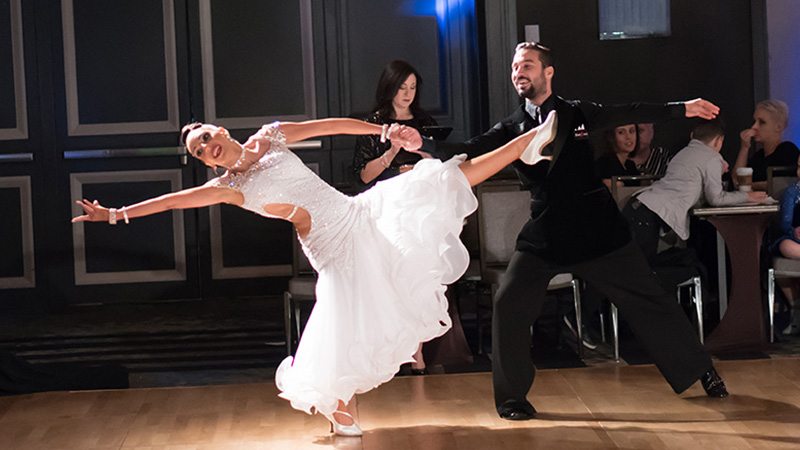
American Smooth Waltz is a travelling dance in 3/4 time with a continuous rise and fall that makes the movement look like breathing. What separates it from the International version is permission to break frame — partners release into underarm turns, side-by-side passages and solo work. Music runs 28–30 measures per minute. Think “Moon River” or “The Way You Look Tonight.”
→ Learn Waltz at Dance With Me
Tango
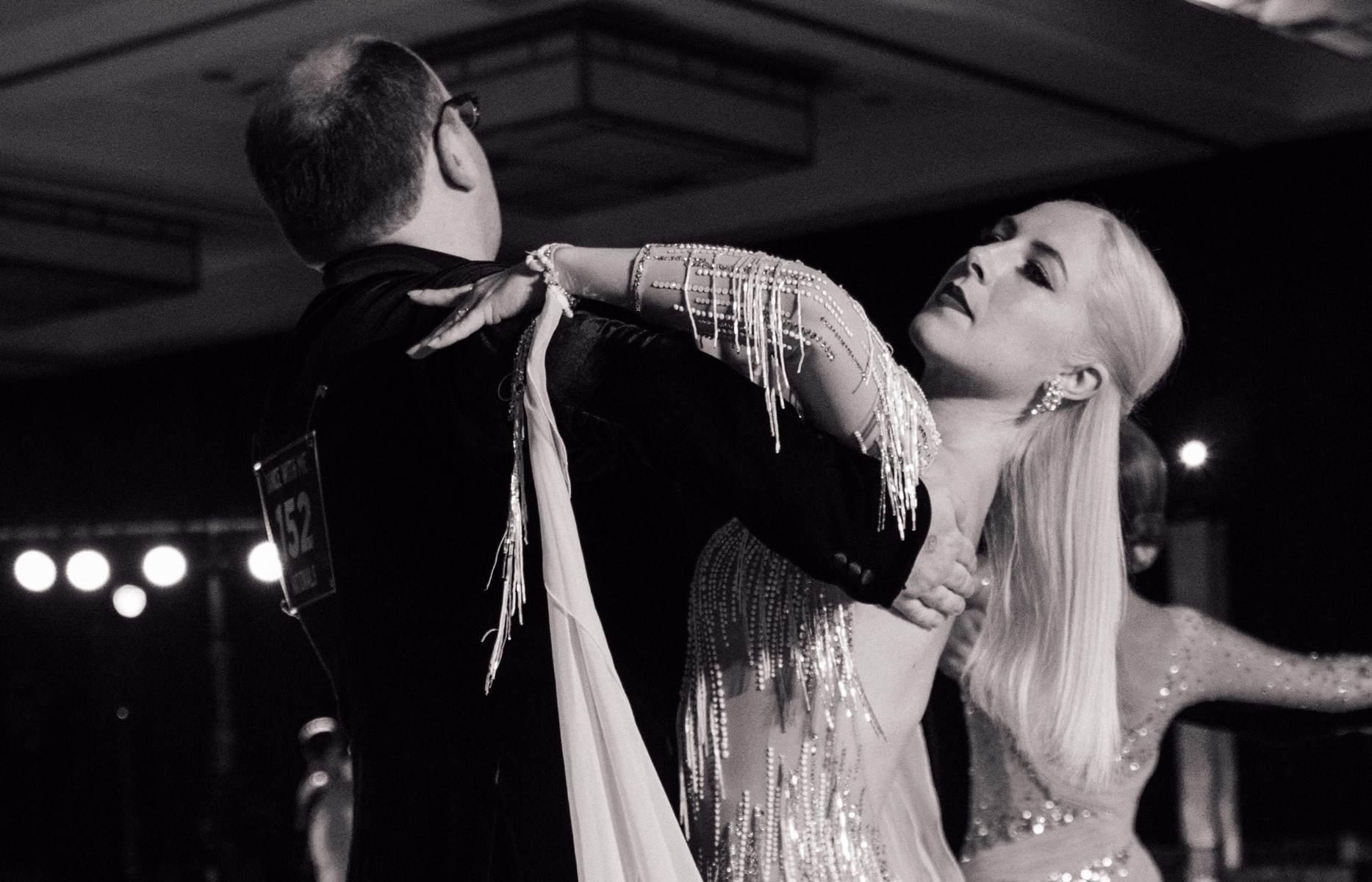
American Smooth Tango is a staccato dance in 2/4 time built on sharp changes of direction and a low, prowling walk. It has no rise and fall — the head snaps, the knees stay flexed and the feet stay grounded. Because American Smooth allows open work, partners separate, fan out and rejoin, which is what gives it its theatrical quality. Tempo: 30–32 measures per minute.
→ Learn Tango at Dance With Me
Foxtrot
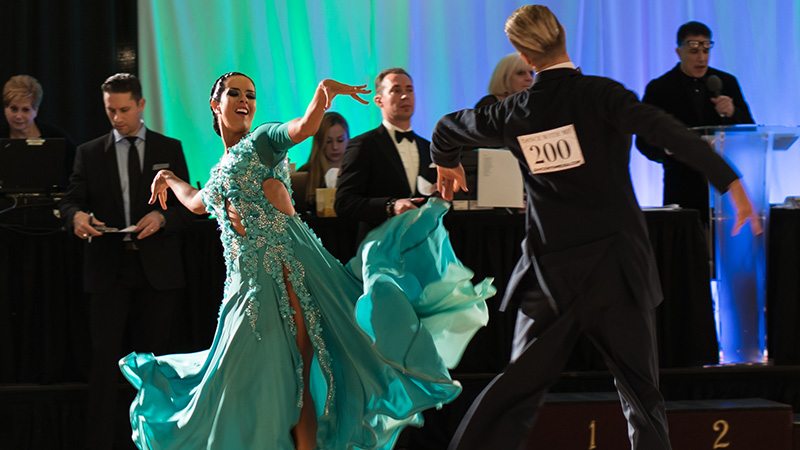
Foxtrot is a smooth 4/4 dance of long walks and quick side steps, danced to big band and jazz standards — Sinatra is the reference point. The American version runs faster and looser than International Slow Foxtrot, at 30–34 measures per minute, and permits the frame to open. It is the dance most often taught for a wedding first dance.
→ Learn Foxtrot at Dance With Me
Viennese Waltz
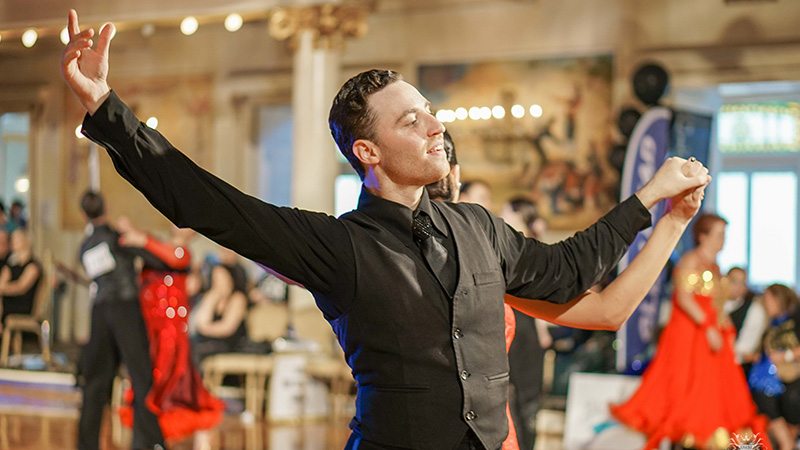
Viennese Waltz is the fast waltz: 3/4 time at 53–58 measures per minute, roughly twice the speed of standard Waltz, danced as near-continuous rotation around the floor. The American version adds figures the International syllabus excludes — underarm turns, checks and open passages. Its speed makes balance, not choreography, the limiting factor for most students.
→ Learn Viennese Waltz at Dance With Me
American Rhythm: 5 Dances
American Rhythm dances stay largely in one spot and are built on Cuban motion — hip movement generated by alternately bending and straightening the knees, so weight settles into each step and the hips follow as a consequence rather than being pushed. Cuban motion is the single technique that separates Rhythm from Smooth.
Cha-Cha
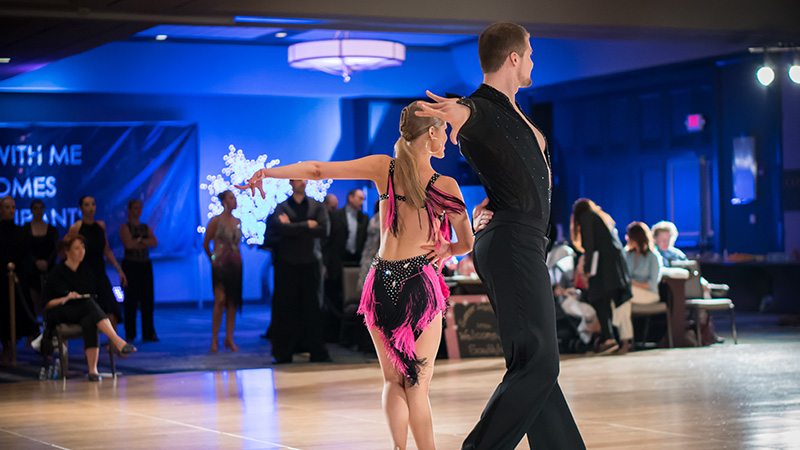
Cha Cha is a 4/4 spot dance named for the triple step at its centre — the “cha-cha-cha” that falls across beats four-and-one. It is quick and flirtatious at 30–31 measures per minute, danced with bent knees and full Cuban motion. American Rhythm Cha Cha keeps the steps compact and closer to the floor than its International counterpart.
→ Learn Cha-Cha at Dance With Me
Rumba
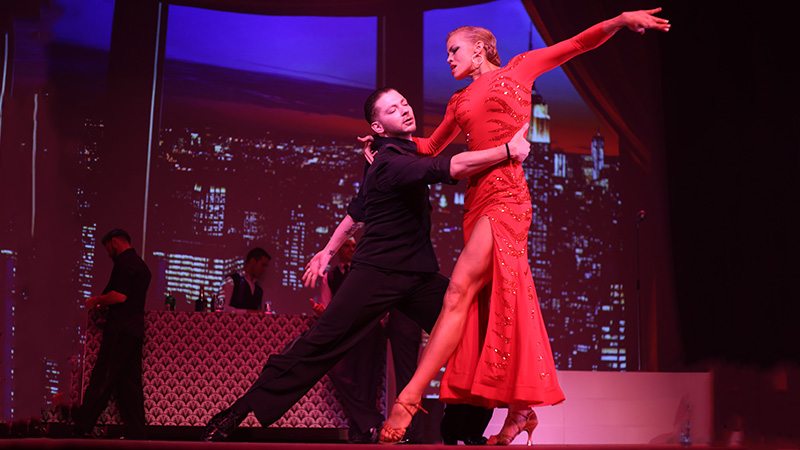
American Rumba is the slow, romantic dance of the Rhythm syllabus, danced in 4/4 on a box-step pattern with deep Cuban motion. It runs noticeably faster than International Rumba — 30–36 measures per minute against 22–27 — and breaks on the first beat rather than the second. After Foxtrot, it is the most requested wedding dance we teach.
→ Learn Rumba at Dance With Me
East Coast Swing
East Coast Swing is a bouncy 4/4 circular dance built on a six-count basic: triple step, triple step, rock step. Danced at 34–36 measures per minute to jump blues, rockabilly and early rock and roll, it’s full of underarm turns, wraps and tuck turns. Most instructors consider it the fastest dance for a complete beginner to look competent in.
→ Learn East Coast Swing at Dance With Me
Bolero
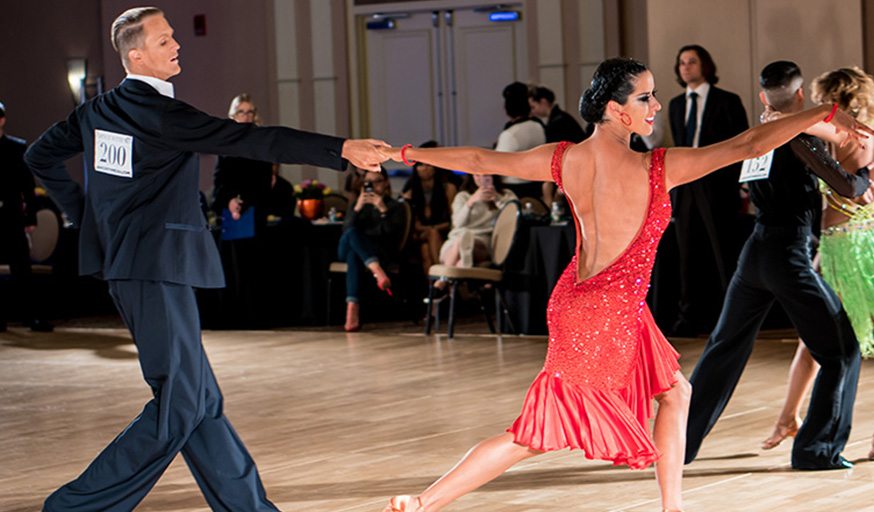
Bolero is the outlier of American Rhythm: it combines the Cuban motion of Rumba with the rise and fall of Waltz, danced slowly in 4/4 at 23–26 measures per minute. Unlike the other Rhythm dances it travels, and the body lowers and rises through each step. It exists only in the American syllabus — there is no International Bolero.
→ Learn Bolero at Dance With Me
Mambo
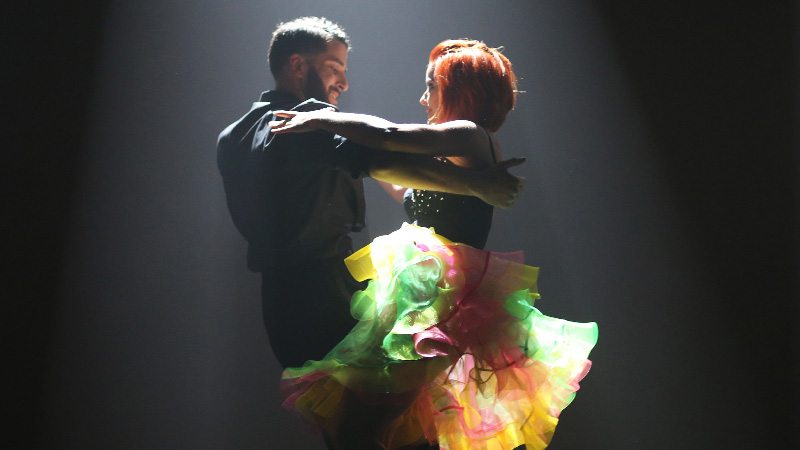
Mambo is the fastest American Rhythm dance at 47–51 measures per minute, danced in 4/4 with a sharp break on the second beat and a hold on the first. It is the competitive ancestor of social Salsa and shares much of its vocabulary. That accent on two is what distinguishes it — dancers count “hold, two, three, four.”
International Standard: 5 Dances
International Standard is defined by a single rule: the closed hold is never released. All five dances are danced in constant body contact from the first bar to the last, travelling counter-clockwise around the floor. Every figure in the syllabus is built inside that constraint.
Waltz
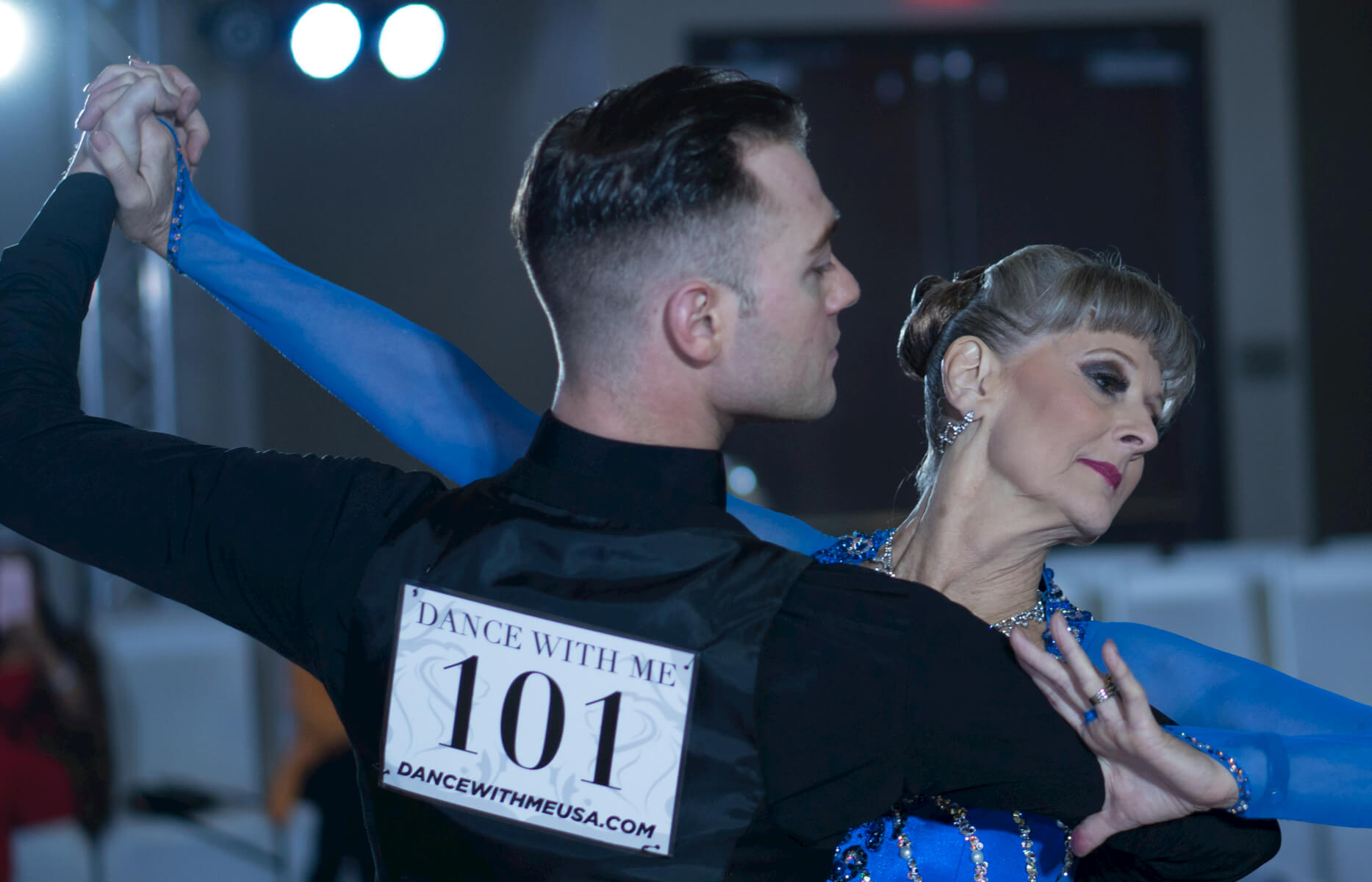
International Standard Waltz is danced in 3/4 at 28–30 measures per minute, entirely in closed hold. Rise and fall drives every figure, and the sway through the body is more pronounced than in the American version. Natural turns and reverse turns form the spine of the syllabus, with the frame held constant throughout.
→ Learn Waltz at Dance With Me
Tango
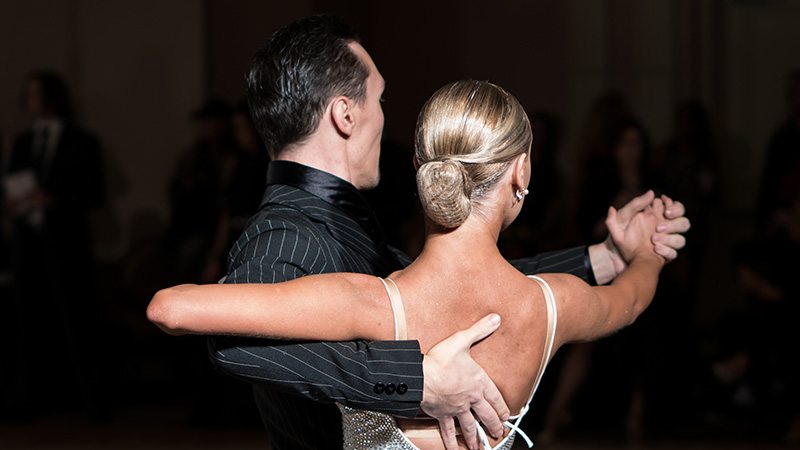
International Standard Tango is the sharpest dance in the Standard syllabus: 2/4 time at 30–32 measures per minute, with no rise and fall at all. The knees stay flexed, the walks are deliberate and stalking, and head snaps punctuate the phrasing. The hold is more compact than the other four Standard dances, with the follower positioned further to the leader’s right.
→ Learn Tango at Dance With Me
Viennese Waltz
International Viennese Waltz is the fastest Standard dance at 53–58 measures per minute in 3/4, and the smallest in vocabulary — the championship syllabus is built almost entirely on natural turns, reverse turns and the fleckerl. Its difficulty isn’t the figures; it’s sustaining continuous rotation at that tempo without losing the frame or the floor.
→ Learn Viennese Waltz at Dance With Me
Slow Foxtrot
Slow Foxtrot is widely considered the hardest dance in the Standard syllabus. Danced in 4/4 at 28–30 measures per minute, it demands continuous unbroken movement — no visible start or stop between figures, with the swing carrying through from one step into the next. Balance faults that other dances disguise are exposed immediately here.
→ Learn Foxtrot at Dance With Me
Quickstep
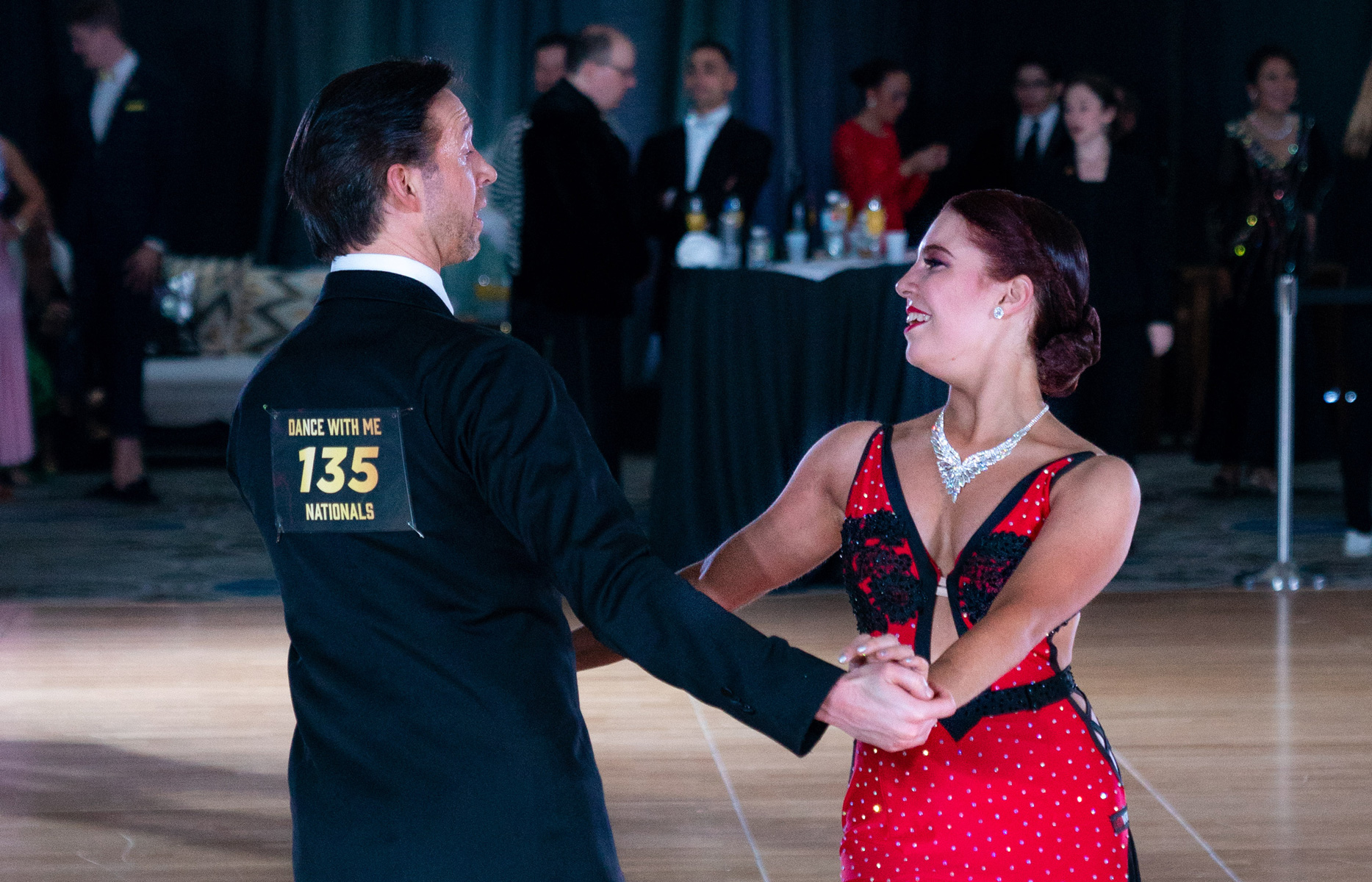
Quickstep is the fastest Standard dance, in 4/4 at 48–52 measures per minute, and the most exuberant — hops, skips, runs, locks and kicks travelling at speed around the floor. It grew out of a fast Foxtrot in the 1920s and kept the Charleston’s syncopation. Stamina is the limiting factor: a full Quickstep round is genuinely aerobic.
International Latin: 5 Dances
International Latin is the most athletic of the four categories. Its defining technique is the straight leg — the supporting leg fully straightens on every weight change, and the hip action follows as a consequence of that straightening rather than being generated independently. Partners separate freely, unlike Standard.
Samba
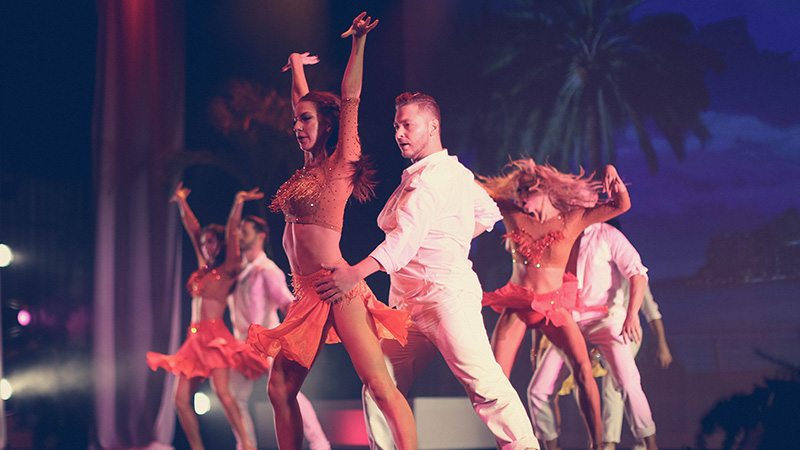
Samba is the only travelling dance in International Latin, moving around the floor rather than staying on the spot. Danced in 2/4 at 48–52 measures per minute, it is defined by the samba bounce — a rhythmic compression and extension through the knees and ankles that gives the dance its lift. Its vocabulary borrows directly from Brazilian carnival.
→ Learn Samba at Dance With Me
Cha-Cha
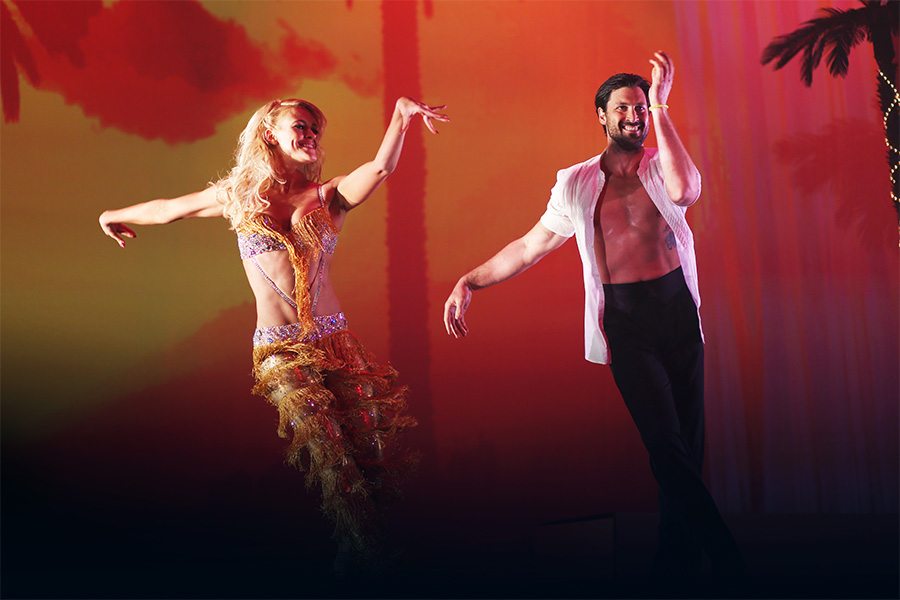
Cha-Cha in International Latin is danced in 4/4 at 30–31 measures per minute with fully straightened legs on every weight change. It is sharper and more precise than the American Rhythm version — the check actions are crisper, the hip settle is a consequence of the straight leg rather than a separate movement, and the syllabus is more tightly defined.
→ Learn Cha-Cha at Dance With Me
Rumba
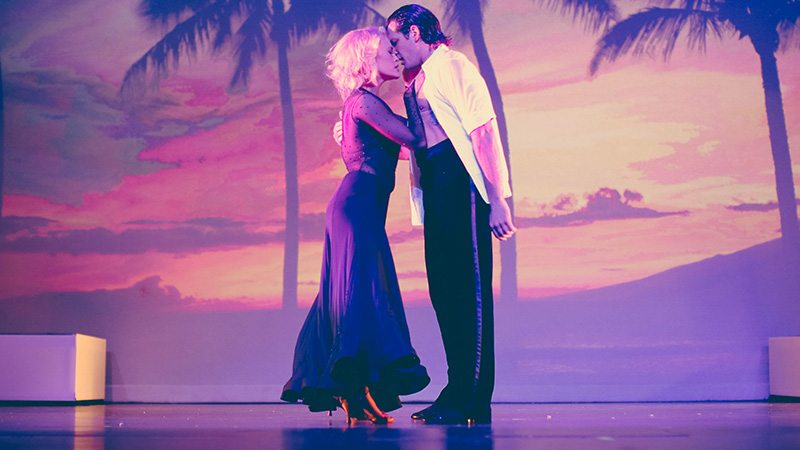
International Rumba is the slowest Latin dance at 22–27 measures per minute in 4/4, and the most demanding to perform convincingly. The break falls on the second beat, not the first, and beat one is held — that pause is where the drama lives. Every step straightens the supporting leg fully before weight transfers.
→ Learn Rumba at Dance With Me
Paso Doble
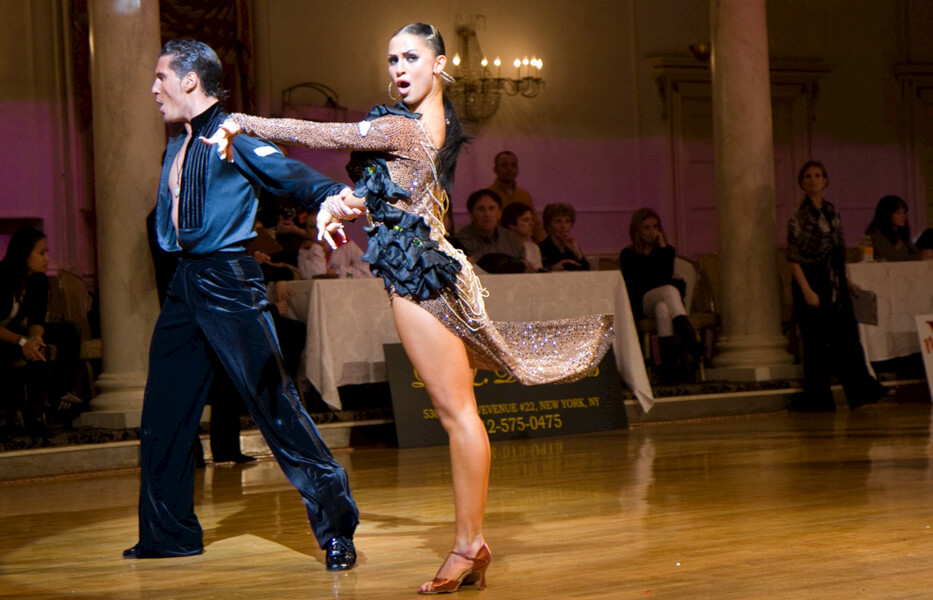
Paso Doble is the theatrical dance of International Latin, danced in 2/4 at 55–60 measures per minute to march music — traditionally “España Cañí.” The leader represents a matador; the follower most commonly represents his cape, though interpretations vary. It is the only Latin dance without Cuban hip action: the carriage stays upright and Spanish.
→ Learn Paso Doble at Dance With Me
Jive
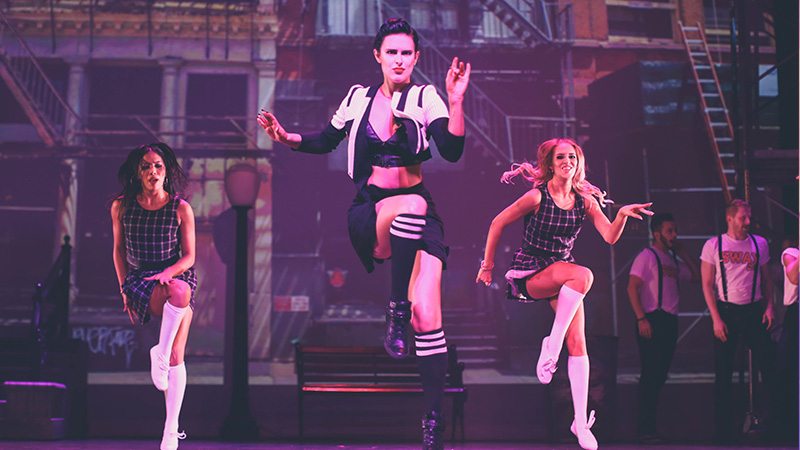
Jive is the fastest International Latin dance at 38–44 measures per minute in 4/4, and it is always danced last in a competition round for exactly that reason. Built on triple steps, kicks and flicks, with the knees lifting sharply and the feet staying under the body, it descends from the Jitterbug and shares its DNA with East Coast Swing.
All 19 Ballroom Dances at a Glance
Tempo is measured two ways. Measures per minute (MPM) counts complete bars of music and is what competition rulebooks specify. Beats per minute (BPM) counts individual beats — the figure a metronome or a music app shows. Multiply MPM by the beats in the bar to convert. Tango below is counted strictly in 2/4; some charts publish it as 120–132 BPM by counting the double pulse instead.
| Dance | System | Category | Time | MPM | BPM | Difficulty |
|---|---|---|---|---|---|---|
| Waltz | Both | Smooth / Standard | 3/4 | 28–30 | 84–90 | Beginner |
| Tango | Both | Smooth / Standard | 2/4 | 30–32 | 60–64 | Intermediate |
| Foxtrot | American | Smooth | 4/4 | 30–34 | 120–136 | Beginner |
| Slow Foxtrot | International | Standard | 4/4 | 28–30 | 112–120 | Advanced |
| Viennese Waltz | Both | Smooth / Standard | 3/4 | 53–58 | 159–174 | Intermediate |
| Quickstep | International | Standard | 4/4 | 48–52 | 192–208 | Advanced |
| Cha Cha | Both | Rhythm / Latin | 4/4 | 30–31 | 120–124 | Beginner |
| Rumba (American) | American | Rhythm | 4/4 | 30–36 | 120–144 | Beginner |
| Rumba (International) | International | Latin | 4/4 | 22–27 | 88–108 | Advanced |
| East Coast Swing | American | Rhythm | 4/4 | 34–36 | 136–144 | Beginner |
| Bolero | American | Rhythm | 4/4 | 23–26 | 92–104 | Intermediate |
| Mambo | American | Rhythm | 4/4 | 47–51 | 188–204 | Intermediate |
| Samba | International | Latin | 2/4 | 48–52 | 96–104 | Intermediate |
| Paso Doble | International | Latin | 2/4 | 55–60 | 110–120 | Advanced |
| Jive | International | Latin | 4/4 | 38–44 | 152–176 | Intermediate |
Tempi follow NDCA and WDSF competition guidance. Verify against the current rulebook edition — figures are revised periodically.
Same Name, Different Dance
Six dances appear in both systems under the same name. They are not the same dance. This is the single most common source of confusion for new students, and it’s why a studio will ask which style you want before booking a lesson.
Waltz. Both are 3/4 with rise and fall. International Standard holds the closed frame from start to finish; American Smooth releases it for underarm turns, side-by-side work and solo passages. Same tempo, same feel, different amount of freedom.
Tango. International Standard Tango is more compact and more aggressive, with a closer hold and no separation. American Smooth Tango opens up — partners break apart and rejoin, which makes it read as more theatrical. Neither has rise and fall.
Foxtrot. These diverge more than any other pair. American Foxtrot runs 30–34 MPM, looser and more forgiving. International Slow Foxtrot runs 28–30 MPM and demands continuous, unbroken swing through every figure — it’s the dance most competitors name as the hardest in the syllabus.
Rumba. The clearest difference of the six. American Rumba is faster (30–36 MPM) and breaks on beat one. International Rumba is slower (22–27 MPM), breaks on beat two, and holds beat one. If you learned one and try the other, the timing will feel wrong before anything else does.
Cha Cha. American Rhythm keeps the knees bent with steps compact and close to the floor. International Latin straightens the leg fully on every weight change, producing a sharper, more extended look.
Viennese Waltz. Same tempo, different vocabulary. International restricts the syllabus to natural turns, reverse turns and the fleckerl. American adds underarm turns, checks and open figures.
Social and Nightclub Partner Dances: 7 Dances
Not every partner dance taught in a ballroom studio belongs to a competitive ballroom category. These are the dances people actually encounter at parties, weddings and clubs — no syllabus, no closed frame requirement, and in most cases no competition circuit. We teach all seven.
Salsa
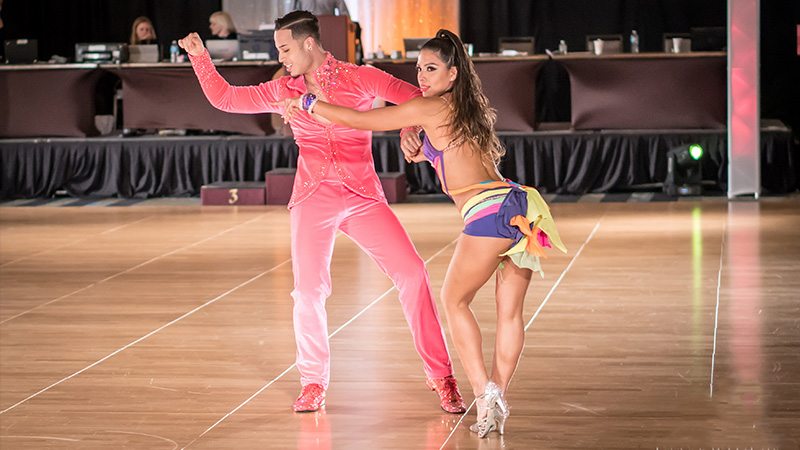
Salsa is a fast 4/4 partner dance danced on the spot, built on three steps across four beats with a hold, to Latin big band and son montuno. It is the most widely danced partner dance in the world. It shares much of its vocabulary with Mambo — the main difference is which beat you break on — but it is not a competitive ballroom dance.
→ Learn Salsa at Dance With Me
Bachata
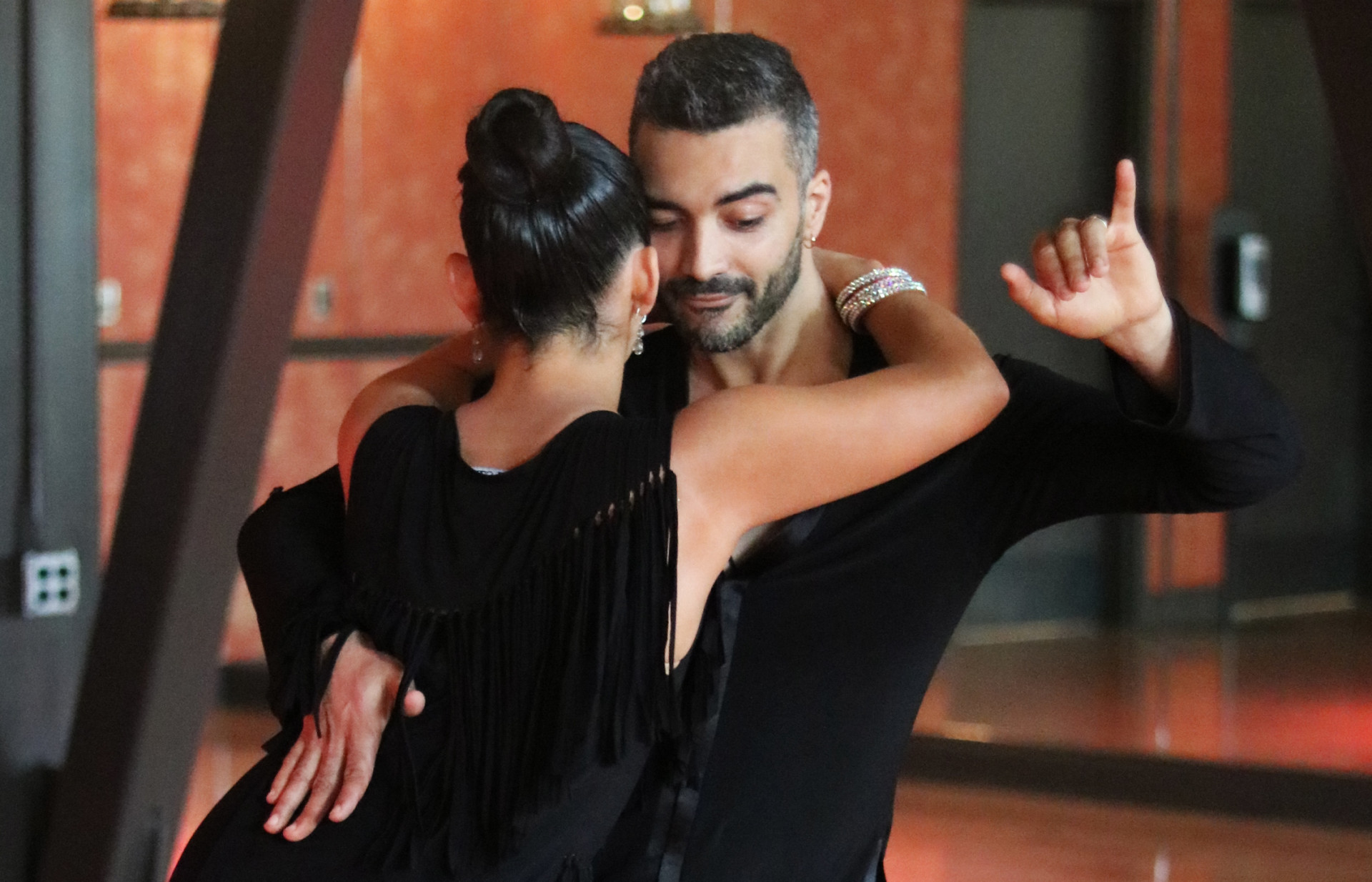
Bachata is a Dominican partner dance in 4/4, built on a four-beat basic: three steps and a hip pop on the fourth. It travels side to side in a small space and is danced close, which makes it forgiving for beginners. It is the most common entry point into Latin social dancing at clubs and socials.
→ Learn Bachata at Dance With Me
Merengue
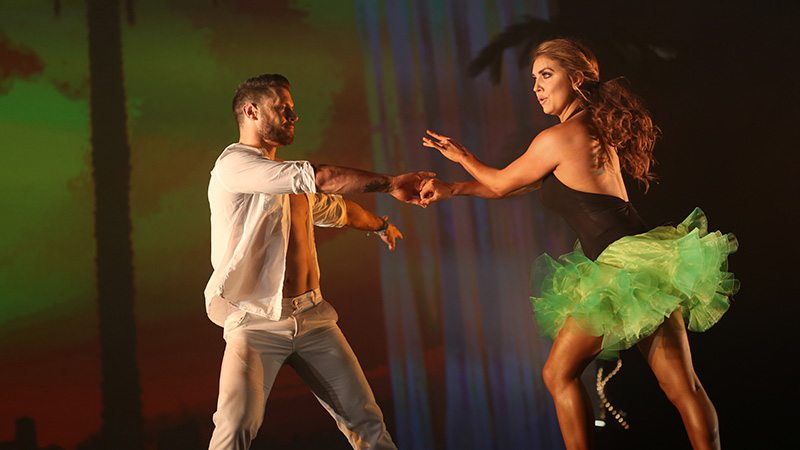
Merengue is the simplest partner dance to learn: a march in place in 2/4, stepping on every beat with a gentle hip sway and turning whenever you like. There is no complicated footwork to master, which is why instructors often teach it in a single lesson — it gives a student something they can actually use that same night.
→ Learn Merengue at Dance With Me
Hustle
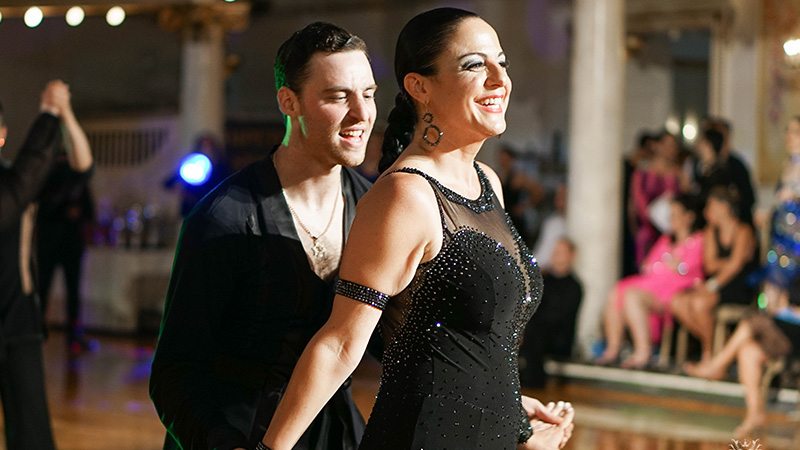
Hustle is the disco-era partner dance, danced in 4/4 at 28–30 measures per minute to four-on-the-floor. It is built on a three-count basic running against four beats of music, which is what gives it its constant forward drive, and it is full of fast spins and continuous turning. It works to modern pop as readily as to seventies disco.
→ Learn Hustle at Dance With Me
West Coast Swing
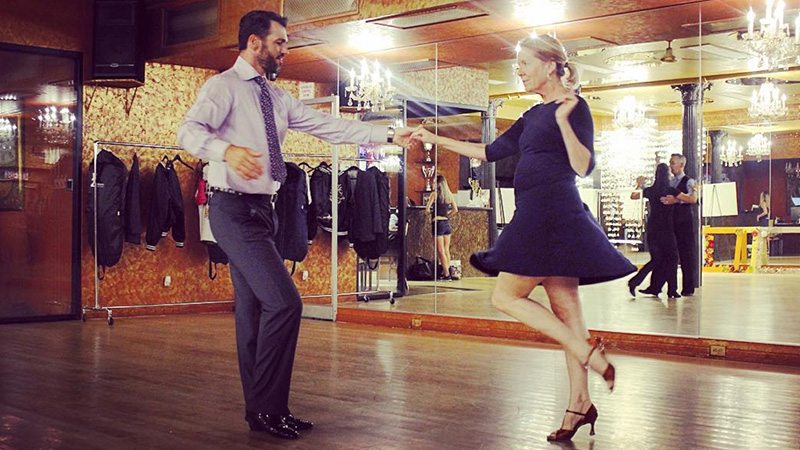
West Coast Swing is a slotted dance — the follower travels back and forth along a narrow lane rather than circling the leader. Danced to blues, R&B and contemporary pop, it is defined by elastic connection and heavy improvisation, with the follower given genuine freedom to interpret. It has the steepest learning curve of the social dances and the most devoted following.
→ Learn West Coast Swing at Dance With Me
Kizomba
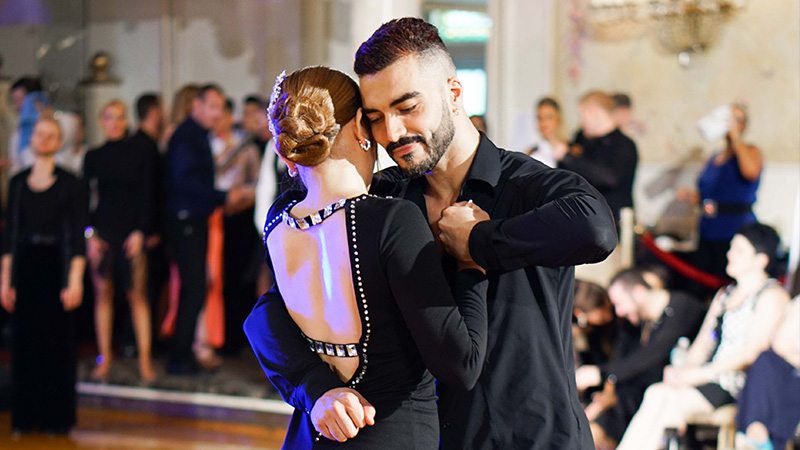
Kizomba is an Angolan partner dance, slow and walking-based, danced in a close embrace to a soft 4/4 rhythm. The lead comes through body contact rather than the arms, and the movement stays low and grounded with subtle hip isolation. It is closer in feel to Argentine Tango than to the Latin dances it is often grouped with.
→ Learn Kizomba at Dance With Me
Argentine Tango
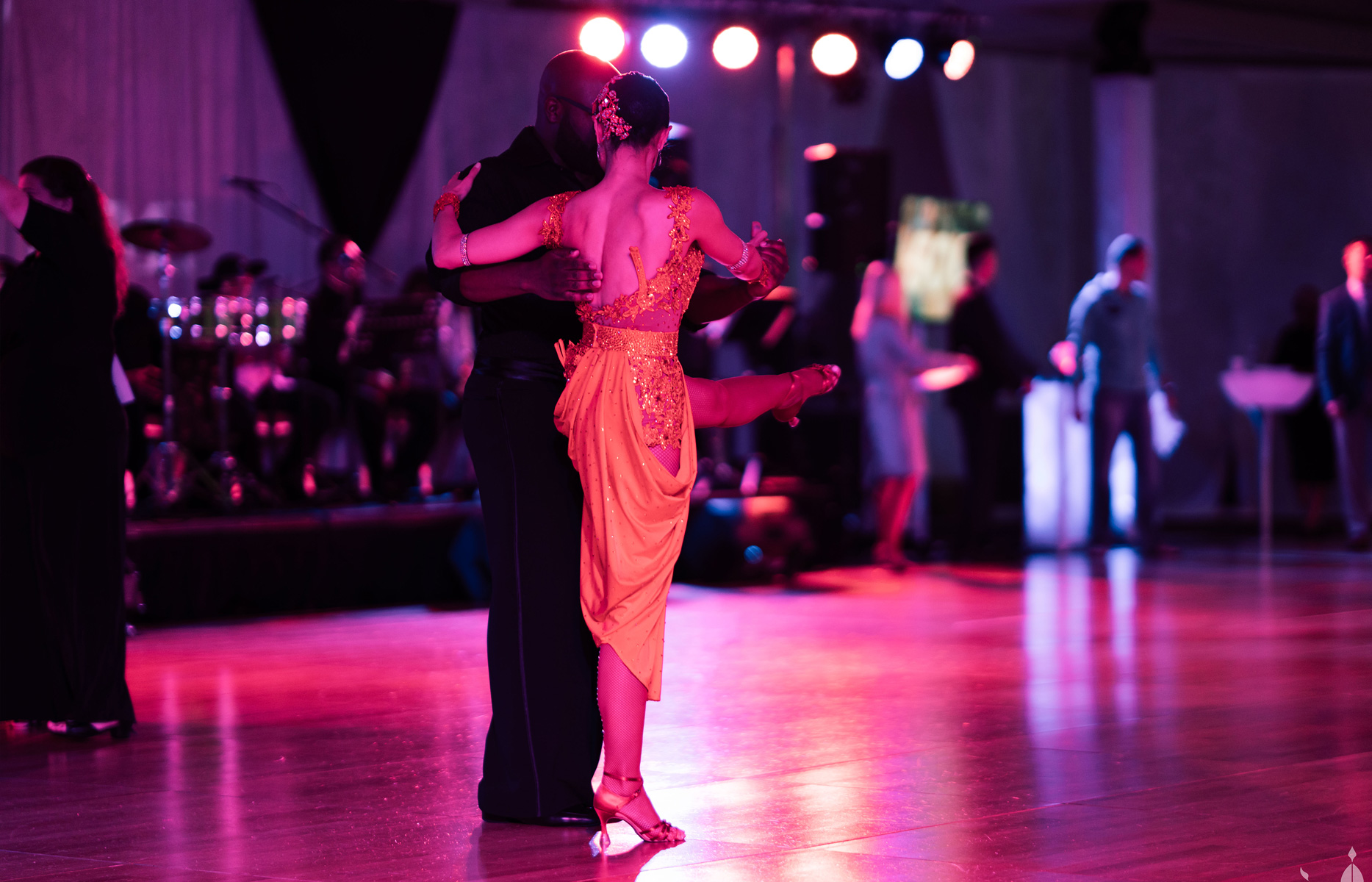
Argentine Tango is the original tango, and a separate dance from the ballroom Tango found in American Smooth and International Standard. It is improvised rather than choreographed, has no fixed syllabus, and uses a closer embrace with the connection running through the chest. Ballroom Tango descends from it, but the two are danced and taught as distinct forms.
→ Learn Argentine Tango at Dance With Me
Solo and performance styles
We also teach Hip Hop, Contemporary and Musical Theater — solo forms outside the partner-dance tradition entirely, offered for performance training and general movement work.
Which Ballroom Dance Style Should You Learn First?
The right starting point depends on why you’re dancing, not on which dance is technically easiest.
You have a wedding coming up. Start with Foxtrot or American Rumba. Both work with the widest range of songs, both look composed on video, and both can be brought to a presentable level in six to eight weeks.
You want to feel confident at parties and social events. East Coast Swing and Cha Cha first, then Salsa. These are the dances that actually get played, and swing in particular gives beginners a competent-looking result faster than anything else in the syllabus.
You’re interested in competing. Start in International Standard or International Latin from your first lesson. The technique is stricter, and unlearning American habits later costs more time than starting in the right system.
You’re here for the fitness and the challenge. International Latin. Samba and Jive in particular are demanding enough to stand as a workout on their own.
Not sure? Start with our beginner’s guide to ballroom lessons, or find a Dance With Me studio near you and take a first lesson before you decide.
Frequently Asked Questions
How many ballroom dances are there?
There are 19 competitive ballroom dances across four categories: American Smooth (4), American Rhythm (5), International Standard (5) and International Latin (5). Six dances — Waltz, Tango, Foxtrot, Viennese Waltz, Cha Cha and Rumba — appear in two categories with different technique. Dance With Me teaches all 19, plus social and interpretive styles.
What is the difference between American and International ballroom?
American Style lets partners break apart and dance in open position. International Style holds a closed frame throughout in Standard, and follows a stricter technical syllabus in Latin. American Style dominates US social dancing and weddings; International Style is the global competition standard. Dance With Me instructors train in both.
Is salsa a ballroom dance?
No. Salsa is a social partner dance rather than one of the four competitive ballroom categories, and we list it under Social styles. It is widely taught in ballroom studios, including ours, and shares much of its vocabulary with Mambo — which is a competitive American Rhythm dance.
What is the easiest ballroom dance to learn?
Merengue and East Coast Swing are the two most beginners pick up fastest. Merengue is built on a simple march in place, which makes it the perfect way to ease into the art of Latin dancing. East Coast Swing uses a six-count basic that repeats predictably. Foxtrot is the easiest of the Smooth dances.
What is the hardest ballroom dance?
Most competitors name International Slow Foxtrot, which demands continuous unbroken movement with no visible start or stop between figures. Quickstep is close behind for stamina, with its playful gliding, jumping and sometimes running motion across the floor. Paso Doble is hardest for presentation rather than footwork.
Do I need a partner to take ballroom lessons?
No. Private lessons are taught with a professional instructor as your partner, and group classes rotate partners throughout. Our local ballroom studios bring together a welcoming community of dancers eager to learn and grow, and most of our students start without a partner.
Learn Any of These at Dance With Me
We teach all 19 competitive ballroom dances plus the social and nightclub styles above, following syllabi endorsed by DVIDA, the NDCA and the ISTD. Our instructors train in both American and International systems, so you can start in one and move to the other without changing studios.
Find a studio near you · Beginner’s guide to ballroom lessons