
Jive Dance
Jive is an American swing-rooted partner dance developed from African American dances in the United States during the 1930s and later codified in Britain, danced to rock ’n’ roll, jump blues, and swing music at approximately 128–176 BPM.
Its six-beat basic combines a rock step with two chassés and is known for compact footwork, playful kicks, sharp flicks, and infectious energy.
Quick Profile
-
Origin: United States (Early 1930s)
-
Style Family: International Latin
-
Difficulty: Intermediate
-
Best For: Energetic dancers who enjoy a challenge
Music & Rhythm
-
Music: Rock ’n’ roll, jump blues, swing (e.g., Bill Haley, Little Richard)
-
Tempo: 128–176 BPM
-
Timing: 4/4; counted 1, 2, 3a4, 5a6
What Makes Jive Different
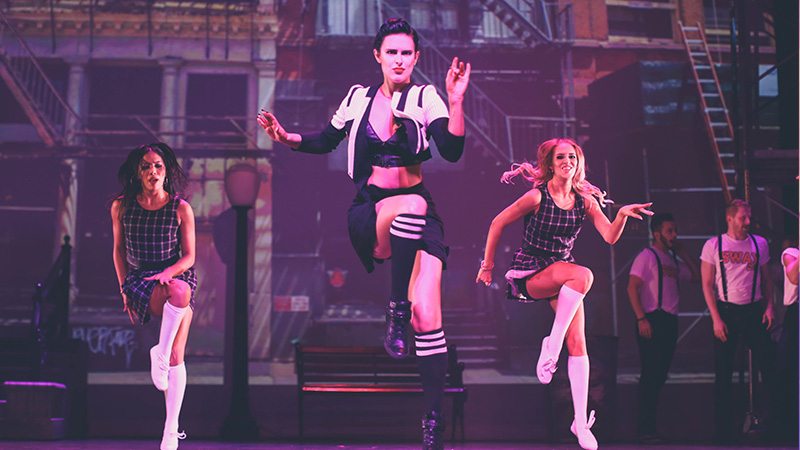
Jive looks explosive from across the room: quick chassés, springy knee action, playful kicks, and sharp changes of direction create its unmistakable energy. Partners use a light, elastic connection, while compact steps keep the dance controlled at high speed. Unlike progressive ballroom styles, Jive generally stays within a small area of the floor. It shares its swing roots and six-beat structure with East Coast Swing, but Jive is faster, sharper, and uses straighter supporting legs. Explore the differences in our guide to swing dance styles.
What You’ll Learn in a Jive Class
Your Jive lessons follow a progression designed to develop rhythm, partnership, and confidence:
- Your first lesson: Learn the rock step, two chassés, timing, posture, and partner frame—enough to move through an entire song.
- Your first few months: Add the Link, Fallaway Rock, Change of Places, American Spin, leading and following, and floor awareness.
- Going further: Develop musicality, kicks and flicks, leg action, advanced figures, personal styling, stamina, and social-floor confidence.
No partner is required. In group dance classes, partners may rotate so everyone can practice leading, following, and connection.
Is Jive Right for You?
Jive could be your dance if you are:
- A total beginner who wants an easier introduction through East Coast Swing.
- A couple planning an energetic routine with wedding dance lessons.
- A social dancer ready to practice at dance parties.
- A serious student seeking personalized private dance lessons.
Jive Classes Near You
Learn Jive through personalized private lessons and selected group classes at Dance With Me studios. Group schedules rotate monthly, so contact your nearest studio to confirm current Jive class availability.
New York
New Jersey
Texas
Georgia
Nevada
Connecticut
Find a Dance With Me studio near you →
Learn More About Jive
- Explore all ballroom dance styles
- How to Dance Jive: Basic Steps, Timing and First Moves
- Learn the Basic Steps and Different Styles of Swing
- Discover East Coast Swing
Jive FAQs
Do I need a partner to learn Jive?
No partner is required for Jive lessons. Your instructor can dance with you during private lessons, and partners may rotate during group classes to develop practical leading and following skills.
Is Jive good for beginners?
Jive is accessible to beginners when taught at a comfortable tempo. The basic pattern is straightforward, while its speed, syncopated timing, and technical leg action provide room for continued growth.
What should I wear to a Jive class?
Wear comfortable clothing that allows unrestricted movement and supportive shoes with smooth soles. Avoid highly gripped rubber soles because they can restrict pivots and place unnecessary pressure on your joints.
Do you offer private Jive lessons?
Dance With Me offers private Jive lessons tailored to your experience, pace, and goals. Individual coaching is especially valuable for improving timing, compact footwork, partner connection, technique, and competition preparation.
Ready to try Jive? Book your first lesson at a Dance With Me studio—no partner or experience required.
