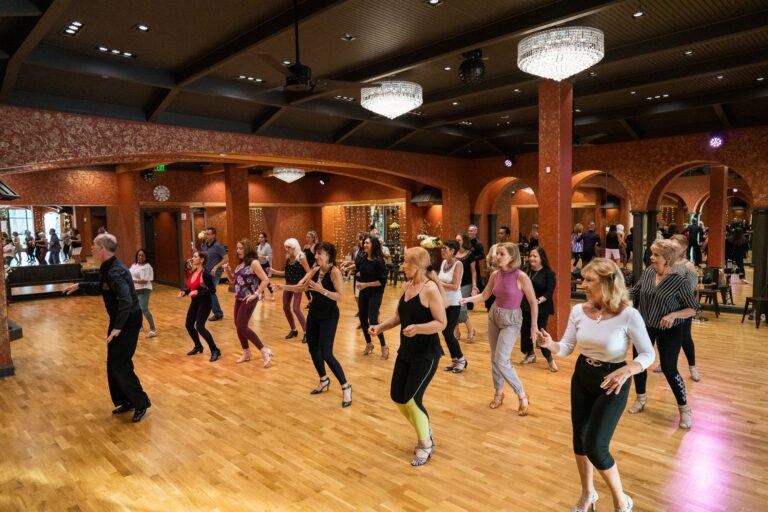
Line dancing is one of the most inclusive, high-energy, and socially engaging forms of dance in the world. Unlike traditional ballroom or swing dancing, you do not need a partner to hit the floor. Instead, dancers stand in parallel rows and lines, executing a synchronized choreography sequence to a repeating wall pattern.
While it is deeply rooted in country-western culture, modern line dancing has evolved to encompass pop, hip-hop, soul, and rock music. Whether your goal is to confidently navigate a local honky-tonk, join an urban shuffle, or find a fantastic cardio workout, getting started is incredibly straightforward.
Quick Comparison: Popular Country Line Dances & Top Line Dance Songs
To give you an immediate advantage before stepping into a studio, here is a structured breakdown of the most famous routines taught in beginner line dance classes around the world.
Dance Name: The Electric Slide
“Electric Boogie” by Marcia Griffiths
Primary Music Genre: Pop / Soul / R&B
Counts / Walls: 18-Count / 4-Wall
Difficulty Level: Absolute Beginner
Dance Name: Boot Scootin’ Boogie
“Boot Scootin’ Boogie” by Brooks & Dunn
Primary Music Genre: Classic Country
Counts/Walls: 32-Count/4-Wall
Difficulty Level: Beginner
Dance Name: The Cupid Shuffle
“Cupid Shuffle” by Cupid
Primary Music Genre: Modern R&B / Hip-Hop
Counts/Walls: 32-Count/1-Wall
Difficulty Level: Absolute Beginner
Dance Name: Copperhead Road
“Copperhead Road” by Steve Earle
Primary Music Genre: Country Rock
Counts/Walls: 30-Count / 4-Wall
Difficulty Level: Intermediate
Dance Name: Wobble
“Wobble” by V.I.C.
Primary Music Genre: Hip-Hop / Urban
Counts/Walls: 32-Count / 4-Wall
Difficulty Level: Beginner
A Deep Dive into Line Dancing Styles
Country Line Dancing Classes
When most people ask, “what is line dancing?” they picture cowboy boots, wood-paneled floors, and acoustic guitars. Traditional country line dancing classes focus on steps choreographed to both vintage honky-tonk tunes and contemporary Billboard country hits.
- The Vibe: High-energy, deeply community-oriented, and structured.
- Key Movements: Expect a lot of emphasis on heel digs, shuffles, scuffs, and stomps. It is perfect for anyone looking to feel confident at country festivals, bars, and rustic social events.
Modern and Urban Line Dancing
Line dancing is no longer confined to country-western spaces. Modern and urban variations are breaking out in dance studios globally, choreographed to top-charting pop, soul, and hip-hop tracks.
- The Vibe: Rhythmic, fluid, and heavily focused on groove and syncopation.
- Key Movements: These routines integrate body rolls, synchronized slides, and intricate footwork that resembles commercial music video choreography.
How Do You Line Dance? The Basic Footwork
If you are stepping onto the floor for the first time, you don’t need to worry about complex, overwhelming choreography. The vast majority of beginner routines are constructed from a few simple, foundational building blocks:
- The Grapevine (Vine): A classic side-traveling step pattern. Step your right foot to the side, cross your left foot behind, step to the side again with your right, and touch your left foot next to it.
- The Box Step: A four-step sequence that tracks the geometric shape of a square on the floor, frequently utilized in slower, rhythmic variations.
- The Pivot Turn: A step forward followed by a sharp $90^\circ$ or $180^\circ$ rotation on the balls of your feet to instantly face a new direction or “wall.”
- Understanding Counts and Walls: Line dances are structured around physical “counts” (typically 16, 32, or 64 beats of music) and “walls.” A 4-wall dance means that once you finish the choreographed sequence, you will have rotated to face a new compass direction, repeating the steps until you have conquered all four walls.
Step Onto the Floor: Find Line Dancing Classes Near You
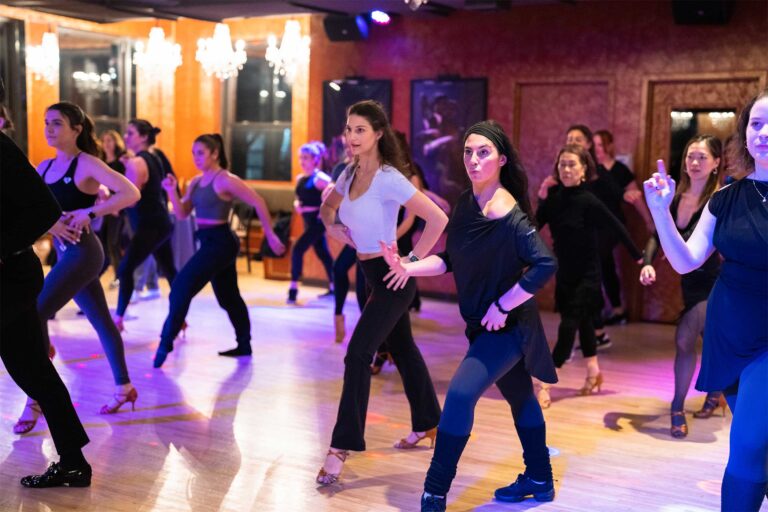
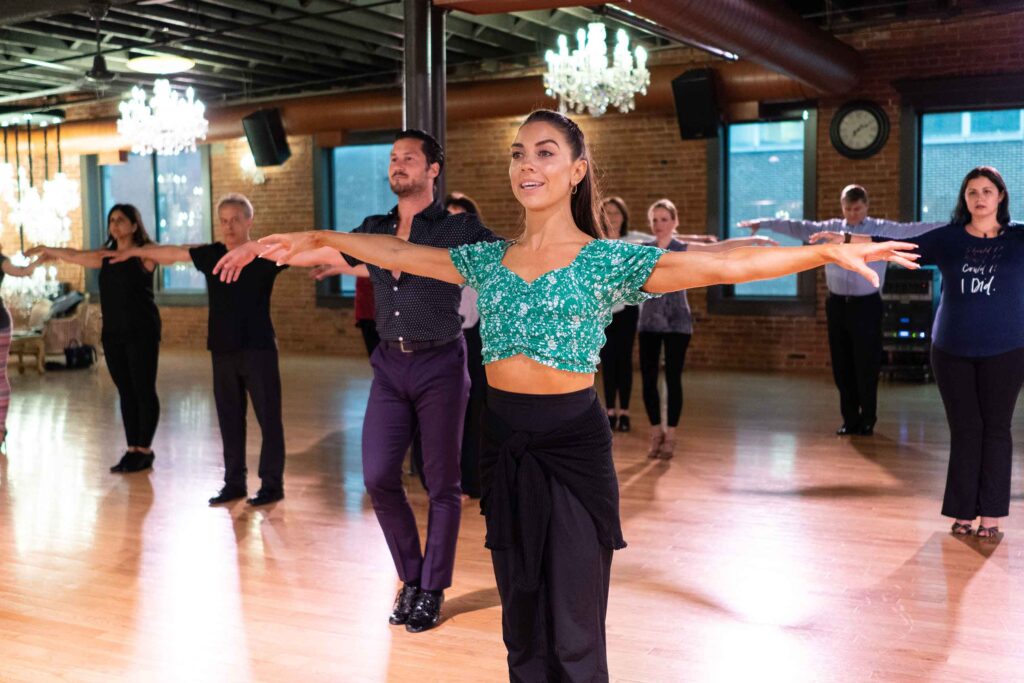
While watching instructional online videos can help you memorize basic footwork, nothing replicates the dynamic energy, camaraderie, and precise physical feedback of a real studio environment. Joining professional dance lessons accelerates your learning curve, prevents you from forming bad technical habits, and introduces you to a vibrant, welcoming local community.
No matter your age, fitness background, or previous experience level, there is a class tailored specifically to your goals.
Frequently Asked Questions (FAQ)
What is line dancing exactly?
Line dancing is a choreographed form of dance where a group of people dance in one or more lines, executing identical movements simultaneously. It does not require a physical partner, making it highly accessible for individual social dancers.
How do you line dance if you have zero rhythm?
Line dancing is actually the ideal style for individuals who feel they lack natural rhythm. Because the steps are highly mathematical and directly tied to predictable, repeating counts (1-2-3-4), you can master the dance through physical muscle memory and visual coordination rather than relying purely on musical intuition.
Are country line dancing classes a good fitness workout?
Absolutely. Line dancing serves as an exceptional form of low-to-moderate-impact cardio. Continuous movement during a standard one-hour class can burn anywhere from 300 to 500 calories while actively improving your physical balance, core strength, and spatial coordination.
What are the most popular country line dances for beginners?
The most widely taught beginner country line dances include the “Boot Scootin’ Boogie,” “The Tush Push,” and “Watermelon Crawl.” For non-country events, “The Electric Slide” and “The Cupid Shuffle” remain universally popular options.
What should I wear to my first line dance class?
Wear comfortable, breathable clothing that allows a full range of physical movement. For footwear, smooth leather-soled shoes or traditional cowboy boots are ideal because they allow you to glide and pivot seamlessly. Avoid heavy rubber-soled athletic sneakers, as they can grip the floor too aggressively, which can put unnecessary strain on your knees and ankles.