In today’s fast-paced world, chronic stress, digital fatigue, and emotional burnout have become quiet norms. When tension accumulates in your body, your nervous system remains stuck in a perpetual “fight-or-flight” response, driving up cortisol levels and leaving you feeling physically drained and mentally overwhelmed.
While traditional stress-relief habits like gym workouts or meditation are beneficial, many people find it difficult to turn off their racing thoughts while exercising alone.
Enter partner dancing—a uniquely powerful, scientifically proven remedy for mental overload.
If you are wondering how partner dancing reduces stress, the core answer lies in its multi-sensory approach: partner dancing combines rhythmic cardiovascular exercise, supportive physical touch, non-verbal communication, and intense cognitive focus into a single activity.
By engaging your brain and body simultaneously, partner dance actively down-regulates stress hormones, stimulates “feel-good” neurochemicals like oxytocin and endorphins, and pulls your mind firmly into the present moment.
Key Takeaway: Partner dancing isn’t just physical exercise—it is an active form of kinetic meditation. The combination of non-verbal physical touch, rhythmic music, and synchronized movement acts as a biological circuit breaker for anxiety and stress.
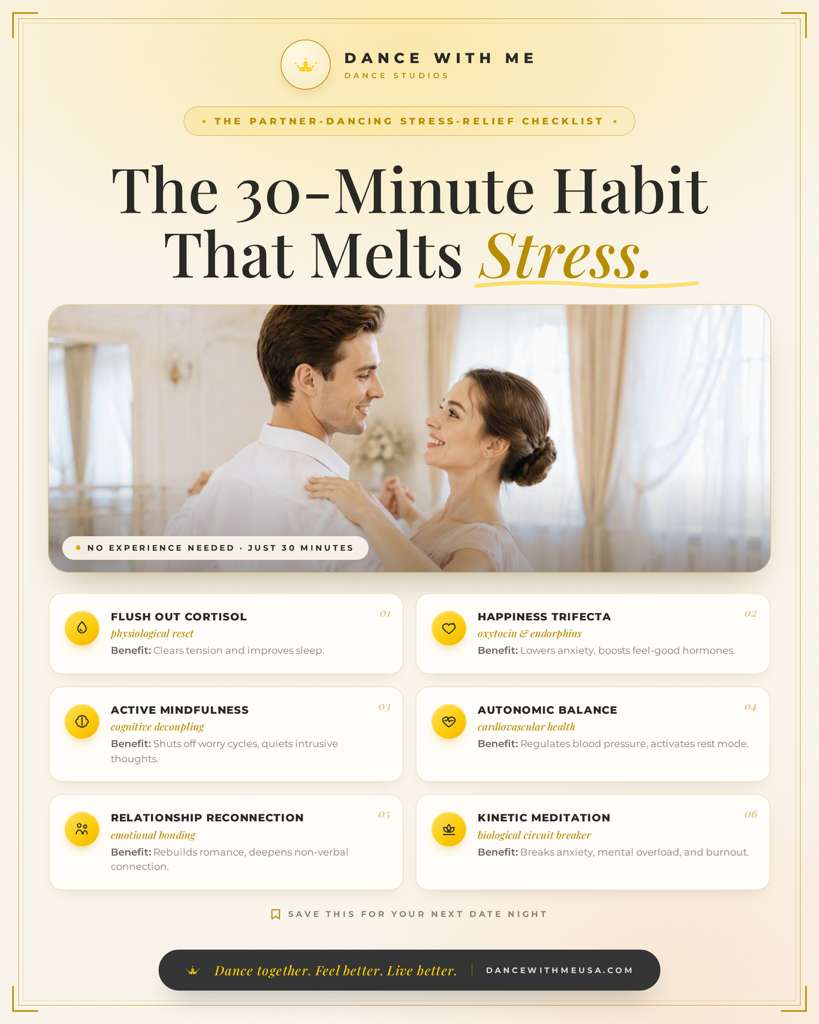
Quick Glance: How Partner Dancing Targets Stress at a Cellular & Psychological Level
To help you understand how dance affects your mind and body, here is a mobile-friendly breakdown of the primary neurochemical and physical pathways involved in stress relief:
-
Cortisol Down-Regulation (Physiological Reset)
-
Mechanism: Rhythmic, low-to-moderate-impact aerobic movement lowers circulating stress hormones.
-
Primary Benefit: Clears physical tension, reduces muscle tightness, and promotes deeper sleep quality.
-
-
Oxytocin & Endorphin Surge (The Connection Hormone)
-
Mechanism: Safe, intentional non-verbal touch and synchronized body motion trigger immediate oxytocin release.
-
Primary Benefit: Lowers heart rate, promotes feelings of trust and safety, and reduces social anxiety.
-
-
Active Mindfulness & Cognitive Decoupling (Mental Reset)
-
Mechanism: Following counts, anticipating partner weight shifts, and tracking music tempo demand 100% mental presence.
-
Primary Benefit: Shuts off repetitive worry cycles, work stress, and intrusive thoughts.
-
-
Cardiovascular & Autonomic Balance (Heart Health)
-
Mechanism: Smooth weight transfers and sustained rhythmic movement improve blood vessel elasticity.
-
Primary Benefit: Helps regulate blood pressure and activates the parasympathetic nervous system (“rest and digest”).
-
-
Relationship Reconnection (Emotional Bonding)
-
Mechanism: Couples move together toward a shared physical goal without distraction from screens or chores.
-
Primary Benefit: Re-establishes romance, improves non-verbal empathy, and offers a fun weekly date-night ritual.
-
The Neurobiology of Movement: How Partner Dancing Deactivates the Stress Response
When stress strikes, your adrenal glands flood your bloodstream with cortisol and adrenaline. Over time, elevated cortisol levels contribute to high blood pressure, sleep disturbances, irritability, and cognitive fatigue.
Partner dancing acts as a natural biological reset button through several distinct neurochemical channels:
1. Flushing Out Cortisol with Aerobic Rhythm
Unlike high-intensity interval workouts that can temporarily spike cortisol if you are already exhausted, styles like Waltz, Foxtrot, Salsa, and Swing provide sustained, low-impact aerobic activity.
As your heart rate gently elevates, your body metabolizes excess adrenaline and begins flushing out lingering cortisol.
2. Triggering the “Happiness Trifecta”
Engaging with a partner to music triggers a synchronized neurochemical response in the brain:
-
Endorphins: Act as natural painkillers and mood boosters, creating a post-dance “high.”
-
Dopamine: The brain’s reward neurotransmitter, released whenever you master a new footwork pattern or pull off a smooth spin.
-
Serotonin: Regulates mood, anxiety, and happiness, leaving you feeling calm and balanced long after class ends.
The Power of Non-Verbal Touch & Oxytocin
Human beings are wired for physical touch. In modern life, however, much of our social interaction occurs through digital screens, leading to what psychologists call “skin hunger” or tactile deprivation.
Partner dancing relies entirely on physical connection—a gentle hand frame, a guiding lead on the shoulder blade, or a shared center of gravity.
When you dance with a partner:
-
Oxytocin Release: Tactile, supportive touch stimulates the pituitary gland to release oxytocin (often called the “bonding” or “cuddle” hormone). Oxytocin directly counters anxiety by lowering blood pressure and reducing amygdala reactivity.
-
Synchronized Co-Regulation: When two people move in rhythm together, their breathing and heart rates naturally begin to co-regulate. Moving in time with someone else fosters a deep sense of psychological safety and shared harmony.
Active Mindfulness: Why Partner Dancing Breaks Anxious Rumination
Have you ever tried sitting quietly to meditate, only to find your mind spiraling through a checklist of work emails and household chores?
This happens because passive activities leave idle mental capacity for worry. Partner dancing solves this problem through active mindfulness.
When you step onto a ballroom floor, your brain must process multiple inputs at once:
-
Hearing the musical beat and identifying timing (e.g., 1-2-3 or 1-2-3-and-4).
-
Maintaining posture, frame, and physical balance.
-
Reading non-verbal weight changes from your partner.
-
Navigating spatial awareness around other couples on the floor.
Because partner dancing demands total sensory and cognitive engagement, your brain literally has zero bandwidth left to dwell on daily stressors. This phenomenon, known as cognitive decoupling, gives your nervous system a true break from mental rumination.
Quick Comparison: Best Partner Dance Styles for Stress Relief
Different dance styles offer distinct stress-relieving benefits depending on your personal personality, energy levels, and goals. Here is how popular couple’s styles compare:
American Waltz
Primary Vibe: Slow, sweeping, graceful (3/4 timing)
PaceStress-Relief Mechanism: Deep breathing, gentle rise-and-fall motion, relaxed focus
Best For: Unwinding after a hectic workday; building posture & elegance
Bachata & Rumba
Primary Vibe: Smooth, sensual, melodic Latin rhythms
PaceStress-Relief Mechanism: Close-embrace connection, fluid hip motion, grounding energy
Best For: Couples wanting to deepen romance and practice quiet physical intimacy
East Coast Swing
Primary Vibe: Upbeat, bouncy, high-energy (6-count)
PaceStress-Relief Mechanism: Rapid endorphin release, laughter, playful cardio outlet
Best For: Shaking off bad mood days and releasing pent-up physical tension
Foxtrot
Primary Vibe: Smooth, continuous, walking rhythm
PaceStress-Relief Mechanism: Effortless floor travel, structured frame, classic jazz feel
Best For: Beginners looking for a low-stress, highly accessible entry point
Salsa
Primary Vibe: Vibrant, fast-paced, dynamic syncopation
PaceStress-Relief Mechanism: High-cardio workout, total focus requirement, social fun
Best For: Burning calories while completely blocking out external worries
Reconnecting Through Motion: Why Couples Need Dance Date Nights
For couples juggling careers, children, and daily responsibilities, conversations can easily become transactional—revolving around schedules, bills, and household logistics. Over time, this routine can cause couples to feel disconnected.
Partner dancing introduces a refreshing dynamic back into relationships:
-
Playful Teamwork: Learning a new physical skill together removes daily domestic pressures and puts both partners on equal footing as fellow learners.
-
Rebuilding Non-Verbal Empathy: Dancers learn to “listen” with their hands, torso, and weight shifts rather than words. Leaders learn gentle clarity, while followers learn patient trust.
-
Dedicated Quality Time: A weekly couples dance lesson creates an uninterrupted sanctuary where phones are put away and eye contact is restored.
Step Onto the Floor: Find the Best Dance Classes for Couples Near You
Reading about the mental and physical benefits of movement is a great starting point, but nothing replicates the rejuvenating energy, tactile feedback, and pure joy of a real studio floor.
Whether you are looking to reignite romance, lower daily workplace stress, prepare for a special event, or simply explore an exciting new hobby together, professional instruction makes learning easy, comfortable, and fun.
At Dance With Me Studios, world-class instructors specialize in guiding couples of all experience levels—from absolute beginners with “two left feet” to seasoned dancers. You’ll enjoy a warm, welcoming, and judgment-free environment designed to help you relax, connect, and move with freedom.
Frequently Asked Questions (FAQ)
Is partner dancing good for relationship stress and marital bonding?
Yes! Partner dancing is widely recognized by relationship experts as an outstanding activity for couples. It requires mutual cooperation, non-verbal communication, physical touch, and shared focus. Learning to dance together helps rebuild intimacy, enhances trust, and provides a fun, screen-free date-night activity away from daily household stressors.
How often should couples attend partner dance classes to feel stress-relief benefits?
Most couples report feeling an immediate mood boost and mental reset after just a single one-hour class. However, attending structured dance lessons 1 to 2 times per week consistently helps maintain lower overall stress levels, builds long-term muscle memory, and provides a reliable weekly outlet for relaxation and bonding.
Do my partner and I need previous experience or good rhythm to start?
Not at all! Absolute beginner partner dance classes are specifically designed for people with zero prior dance experience or musical background. Professional instructors break down footwork into simple, mathematical steps and slow counts, allowing you and your partner to build coordination and rhythm at your own comfortable pace.
Can partner dancing lower blood pressure and chronic anxiety?
Yes. Partner dancing functions as a low-to-moderate-impact aerobic exercise. Regular participation strengthens cardiovascular health, improves blood vessel elasticity, and promotes parasympathetic nervous system activation. Coupled with the release of oxytocin and endorphins, dancing systematically helps lower resting blood pressure and reduce symptoms of chronic anxiety over time.
What should my partner and I wear to our first couples dance class?
Wear comfortable, lightweight clothing that allows a full range of physical movement (smart casual attire or neat activewear works great). For footwear, choose smooth, leather-soled or hard plastic-soled shoes that allow you to slide and pivot smoothly on hardwood floors. Avoid heavy, rubber-soled athletic sneakers, as they can grip the floor too aggressively and place strain on your knees and ankles.