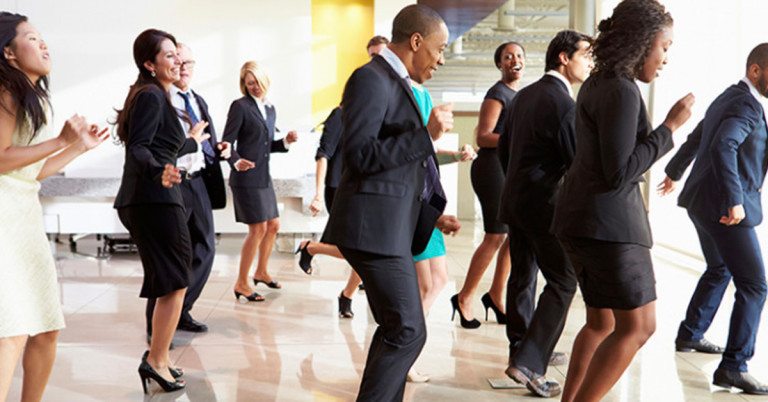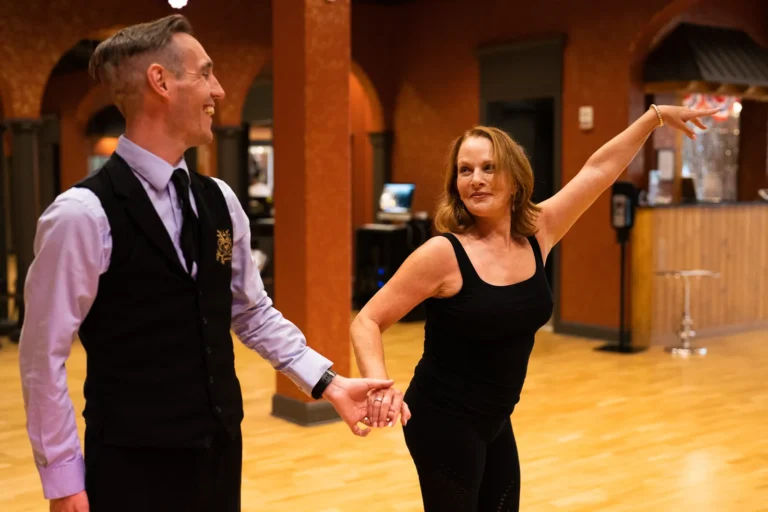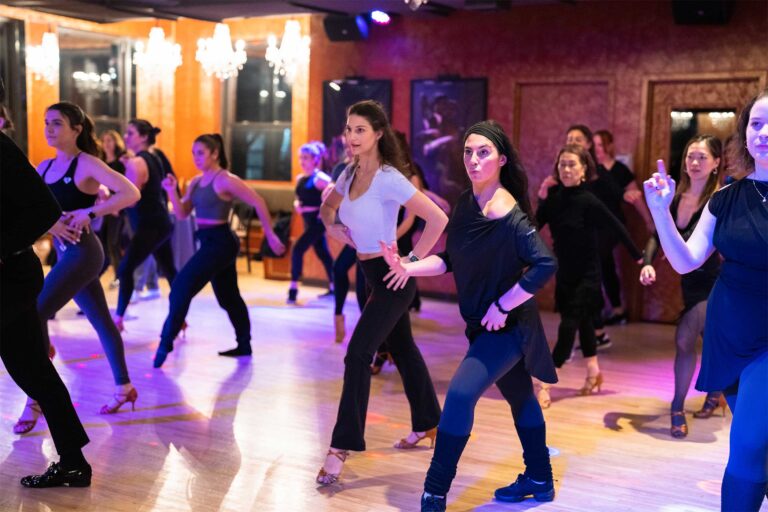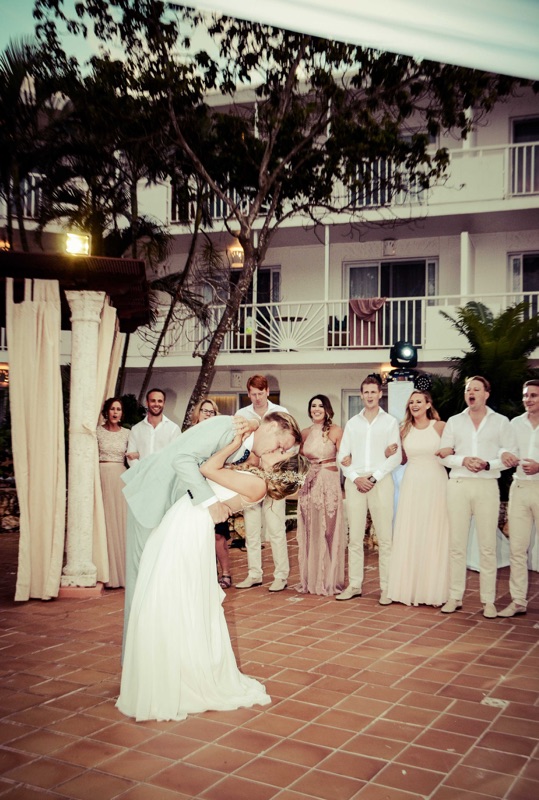
A bridal party dance is any dance the wedding party performs together at the reception, and it comes in three main forms: a traditional slow dance where bridesmaids and groomsmen join the couple after the first dance, a grand entrance dance as the wedding party is introduced, and a choreographed routine performed for the guests. To plan a wedding party routine, pick one format, ask who actually wants to dance, choose and edit a song to about 60 to 90 seconds, build simple choreography around the song’s chorus, and schedule three or four group rehearsals over the final six to eight weeks. Most non-dancers can learn a 90-second routine in that time.
Search “bridal party dance” and you’ll mostly find forum threads arguing about whether it’s awkward, plus playlists. Both miss the real problem: people use the same phrase for three very different dances, and each one needs a different plan.
This guide separates them, then walks through how to plan the one you choose, from asking your friends to the last rehearsal.
Key Takeaways
- A bridal party dance can mean a traditional slow dance with the wedding party, a grand entrance dance, or a choreographed performance, and each format needs a different amount of preparation.
- The traditional bridal party dance usually follows the couple’s first dance and the parent dances, when the best man and maid of honor join the couple on the floor, followed by the rest of the wedding party.
- A choreographed bridal party routine works best at 60 to 90 seconds, because a group of non-dancers can learn that much material in three or four rehearsals and guests stay engaged for the whole performance.
- At typical party-song tempos of 100 to 128 beats per minute, every minute of music holds about 12 to 16 eight-counts of choreography, so a 90-second routine is roughly 19 to 24 eight-counts.
- No bridesmaid or groomsman should be required to dance; a routine with an opt-in featured group and a simpler part for everyone else avoids most of the awkwardness couples worry about.
- Bridesmaids and groomsmen do not have to dance with the person they walked with; many couples let wedding party members dance with their own partners or dates instead.
Planning a wedding party routine? Book a $49 intro wedding lesson at a Dance With Me studio. An instructor will help you pick the format, edit your song and map out the choreography.
What Is a Bridal Party Dance?
A bridal party dance is a dance performed by the wedding party (the bridesmaids, groomsmen and other attendants) at the reception, either with the couple or for them.
The term covers three distinct traditions, which is why two people asking “are you doing a bridal party dance?” can mean completely different things.
| Format | What happens | Who’s on the floor | Typical length | Preparation |
|---|---|---|---|---|
| Traditional bridal party dance | After the first and parent dances, the wedding party joins the couple for a slow song | Couple + wedding party in pairs | One song; guests often join after ~1 min | None to one lesson |
| Grand entrance dance | Each pair dances in as the DJ announces them | Wedding party in pairs, then the couple | 10–20 s per pair | Each pair plans one move |
| Choreographed routine | The wedding party performs a rehearsed number, often as a surprise | Opt-in group, sometimes with the couple | 60–90 s | 3–4 group rehearsals |
| Dance-off | Bridesmaids and groomsmen perform short competing sets | Two groups | 30–45 s per group | 2–3 rehearsals per group |
| Floor-opening line dance | The wedding party starts a line dance and invites guests in | Wedding party, then everyone | One song | Optional quick walkthrough |
Some cultures have their own group wedding dances. At Jewish weddings, the hora is a circle dance in which the couple and often their parents are lifted on chairs, and many South Asian weddings include rehearsed group performances at the sangeet. If your wedding includes one of these, plan it first and fit any other bridal party dance around it.
When Does the Bridal Party Dance at a Wedding?
The traditional bridal party dance happens after the couple’s first dance and the parent dances.
The DJ or bandleader invites the wedding party onto the floor, the best man and maid of honor usually start, the other attendants follow, and then the dance floor opens to all guests.
That sequence makes the wedding party a bridge between the spotlight dances and open dancing.
Performance-style dances have more flexible timing:
- Grand entrance dance: at the start of the reception, as the wedding party is announced and before the couple’s entrance.
- Choreographed routine or surprise: right after the first dance, just after dinner, or right before the dance floor opens. Avoid placing it in the middle of a meal, when guests are seated with their backs to the floor.
- Floor-opening line dance: as the very first open-dancing song, so guests have a reason to join immediately.
One rule from wedding DJs is worth keeping: don’t fill the dance floor and then clear it again.
If the wedding party dances in during the entrance, have them leave the floor promptly so the couple’s first dance has open space.
Is a Bridal Party Dance Still a Thing?
A bridal party dance is optional, and many couples now skip the traditional slow version or replace it with something more fun.
The main complaints about the traditional dance are real: wedding party members are often paired with someone they barely know, their own partners sit and watch, and too many spotlight dances in a row bore guests.
Performance-style routines have grown instead, partly because a fun, rehearsed number solves the awkward-pairing problem.
If you’re unsure, ask your wedding party directly before planning anything.
A routine your friends are excited about will look far better than one they agreed to out of obligation.
How Do You Plan a Bridal Party Dance? A Step-by-Step Plan
Plan a bridal party dance in this order: format, people, song, choreography, rehearsals, then logistics with your DJ.
The steps below assume a choreographed routine, the format that needs the most planning; simpler formats can skip steps 4 to 6.
- Choose the format. Pick one from the table above. Mixing two (for example, an entrance dance and a performance) doubles the rehearsal load, so most groups do one well.
- Ask, don’t assign. Explain the idea to the wedding party and let each person opt in to a featured part or a simpler background part. Anyone who opts out can still cheer from the edge of the floor, which looks intentional rather than missing.
- Choose and edit the song. Pick something upbeat with a clear beat that most guests recognize, then edit it to 60 to 90 seconds. A medley of two or three songs is popular, but every transition is another cue to learn, so beginners do best with one song or two at most.
- Build the choreography around the chorus. Repeat the same combination every time the chorus comes back. Repetition halves the amount of unique material the group has to memorize and gives the audience a moment they recognize.
- Record a practice video. Film the choreography from the front and from behind, at full speed and at half speed, and share it with everyone. Group members who live in different cities can learn the steps at home and use the in-person rehearsals for spacing and timing.
- Schedule three or four rehearsals. Space them across the final six to eight weeks; see the timeline below.
- Hand the final file to your DJ or band. Give them the exact edited track you rehearsed with, the cue for when the routine starts, and the plan for what plays immediately afterward.
- Walk the room before the day. Check the actual dance floor size at the venue and adjust the formation if needed. A routine built for a big studio floor can collide with tables on a small dance floor.
How Long Should a Bridal Party Dance Be?
A choreographed bridal party routine should usually last 60 to 90 seconds, and rarely more than two minutes.
That length gives the group a clear beginning, a big moment and an ending, while keeping the amount of choreography realistic for people who don’t dance.
A grand entrance dance takes 10 to 20 seconds per pair, and a traditional slow bridal party dance usually runs one song, with guests invited to join after the first minute or so.
Length matters because it directly sets how much your friends have to learn.
Choreographers build routines in eight-counts (eight beats of music), and the number of eight-counts depends on the song’s tempo:
| Routine length | Eight-counts at 100 BPM | Eight-counts at 115 BPM | Eight-counts at 128 BPM |
|---|---|---|---|
| 0:45 | ~9 | ~11 | 12 |
| 1:00 | ~12 | ~14 | 16 |
| 1:30 | ~19 | ~22 | 24 |
| 2:00 | 25 | ~29 | 32 |
| 3:00 | ~38 | ~43 | 48 |
Calculation: BPM × minutes ÷ 8. Upbeat pop, funk and dance songs used for wedding party routines typically sit between about 100 and 128 BPM. Calculation by Dance With Me.
A full three-minute song at 128 BPM is about 48 eight-counts, twice as much material as a 90-second edit.
For a group of beginners, that difference is the gap between a routine they can learn in a few rehearsals and one that needs weekly practice for months.
If you love a song that runs four minutes, edit it rather than choreographing all of it.
For how song edits work, see our guide on how long a first dance should be; the same editing methods apply to group routines.
How Many Rehearsals Does a Bridal Party Dance Need?
Most non-dancer wedding parties need three or four group rehearsals of about an hour each to perform a 60-to-90-second routine confidently.
Wedding choreographers commonly recommend at least three one-hour rehearsals for groups of non-dancers, and groups that also practice from a video between sessions often need fewer.
Here’s a timeline that works for most wedding parties:
| When | What to do |
|---|---|
| 3+ months before | Choose the format, ask who wants to dance, pick the song |
| 8–10 weeks before | Edit the song; build the choreography with an instructor or choreographer; record the practice video |
| 6–8 weeks before | Rehearsal 1: learn the full routine in sections |
| 4–5 weeks before | Rehearsal 2: run it to music; fix spacing and transitions |
| 2–3 weeks before | Rehearsal 3: full run-throughs in wedding shoes if possible |
| Week of the wedding | Rehearsal 4 (optional): a quick run after the ceremony rehearsal, ideally at the venue; confirm cues with the DJ |
How long it actually takes depends on group size, how much dance experience your friends have, and how much they practice at home.
A scheduling tip: coordinating six to twelve adults is the hardest part of a bridal party dance, often harder than the dancing. Set all rehearsal dates at once, as soon as the group commits, instead of scheduling them one at a time.
Who Dances With Whom in a Bridal Party Dance?
Bridesmaids and groomsmen don’t have to dance with the person they walked down the aisle with. For the traditional slow dance, many couples now let wedding party members dance with their own spouse, partner or date, which removes the most common complaint about the tradition. For choreographed routines, pairing is a design choice, not a rule.
Options that solve the usual pairing problems:
- Dance with dates. Wedding party members bring their partners onto the floor for the traditional dance.
- Group formations instead of pairs. Routines built in lines, blocks or a V-shape don’t need matched pairs at all, which also handles uneven numbers.
- Split by side. Bridesmaids and groomsmen each perform a section (or compete in a dance-off), then come together for the final chorus.
- Mixed-gender sides welcome. Bridesmen, groomswomen and non-binary attendants slot into a group formation without anyone being “unmatched.”
- Featured and background roles. Confident dancers get the tricky moves; everyone else repeats a simple groove. The group still looks coordinated.
What Are Good Bridal Party Dance Moves for Non-Dancers?
The best bridal party dance moves for non-dancers are simple, repeatable and big enough to read from across the room. Guests watch the group, not individual footwork, so a small move done in unison looks better than a complicated move done slightly out of sync.
Moves that consistently work for beginner groups:
- Step-touch and side-to-side grooves. The foundation of most group choreography; easy to keep in time.
- Arm sequences on the chorus. Pointing, waves, claps and freezes are visible from every seat.
- Formation changes. Walking from a line into a V or two lines into one creates “wow” with almost no technique.
- A ripple or canon. Each person does the same move one count after the person beside them. It looks complex and isn’t.
- Recognizable line-dance steps. A few counts of a dance guests already know, like the Wobble or the Electric Slide, gets the room cheering.
- A partner moment for the couple. If the couple joins the routine, end with a turn and a dip. The rest of the group can freeze and point at them.
If your wedding party prefers line dancing to a choreographed routine, see what line dancing is for the basics.
What Songs Are Good for a Bridal Party Dance?
Good bridal party dance songs have a steady, easy-to-hear beat, a chorus that repeats, and are widely known by guests of every age. For a traditional slow bridal party dance, choose a song about friendship or celebration rather than romance, since the wedding party members aren’t couples.
| Song | Artist | Best for |
|---|---|---|
| Uptown Funk | Mark Ronson ft. Bruno Mars | Choreographed routine |
| Shut Up and Dance | Walk the Moon | Entrance or routine |
| Can’t Stop the Feeling! | Justin Timberlake | Choreographed routine |
| September | Earth, Wind & Fire | Routine for mixed-age crowds |
| Crazy in Love | Beyoncé ft. Jay-Z | Bridesmaids’ section or dance-off |
| Forever | Chris Brown | Aisle or entrance dance |
| Marry You | Bruno Mars | Surprise routine |
| Wobble | V.I.C. | Floor-opening line dance |
| Cupid Shuffle | Cupid | Floor-opening line dance |
| Count on Me | Bruno Mars | Traditional slow bridal party dance |
| Lean on Me | Bill Withers | Traditional slow bridal party dance |
| That’s What Friends Are For | Dionne Warwick & Friends | Traditional slow bridal party dance |
Check the version: radio edits, clean versions and extended mixes have different lengths and sometimes different intros. Rehearse with the exact file your DJ will play.
Should You Hire a Choreographer for a Bridal Party Dance?
Hiring a choreographer or dance instructor is worth it when your routine is longer than a minute, your group has no dance experience, or you want a surprise that has to land on the first try. An instructor builds choreography to your exact song edit, adapts it to the weakest dancer in the group, and teaches it efficiently, which shortens rehearsals for busy adults.
A do-it-yourself routine can work for a grand entrance or a floor-opening line dance, especially if someone in the wedding party has a dance background. A practical middle route is to book a single lesson for the couple or one organizer, learn and record the choreography there, and teach the rest of the group from the video.
If you’re also preparing a first dance and parent dances, ask about building them in the same program. See when to start wedding dance lessons for a full timeline, and our guide to father-daughter and mother-son dances for those spotlight moments.
How Do You Keep a Bridal Party Dance From Being Awkward?
A bridal party dance stays fun when it’s short, opt-in, well rehearsed and followed immediately by open dancing. Most awkward bridal party dances fail on one of those four points: they run too long, include reluctant dancers, haven’t been rehearsed, or leave the wedding party standing alone on a half-empty floor.
- Keep it short. 60 to 90 seconds for a performance; one song for the traditional dance.
- Make it opt-in. Featured parts for the enthusiastic, simple parts for everyone else.
- Rehearse to the real file. A different song version on the day throws off every cue.
- End by inviting guests. Have the DJ go straight into a crowd favorite and the wedding party pull guests onto the floor.
- Limit spotlight dances. If you already have a first dance and two parent dances, a full bridal party dance on top can feel long. Consider a floor-opening line dance instead.
Find Wedding Dance Lessons Near You
A bridal party routine comes together fastest when someone who teaches dance for a living builds it around your song, your friends and your venue’s floor. Choose a studio below to start with your wedding party routine, your first dance, or both.
Dance Studios in New York:
- Wedding Dance Lessons in SoHo, NYC
- Wedding Dance Lessons in Midtown, NYC
- Wedding Dance Lessons in Long Island
Dance Studios in New Jersey:
Dance Studio in Connecticut:
Dance Studios in Texas:
- Wedding Dance Lessons in Austin
- Wedding Dance Lessons in Houston
- Wedding Dance Lessons in The Woodlands
- Wedding Dance Lessons in Southlake
- Wedding Dance Lessons in Fort Worth
Dance Studio in Georgia:
Dance Studio in Nevada:
Frequently Asked Questions
What is a bridal party dance?
A bridal party dance is a dance performed by the wedding party at the reception. It can be a traditional slow dance where bridesmaids and groomsmen join the couple after the first dance, a grand entrance dance as the wedding party is announced, or a choreographed routine performed for the guests.
When does the bridal party dance at a wedding?
The traditional bridal party dance takes place after the couple’s first dance and the parent dances, just before the dance floor opens to all guests. The best man and maid of honor usually start, followed by the rest of the wedding party. A choreographed routine is often performed right after the first dance or right before open dancing begins.
How long should a bridal party dance be?
A choreographed bridal party dance should usually be 60 to 90 seconds long. That keeps the routine learnable for non-dancers in three or four rehearsals and keeps guests engaged. A traditional slow bridal party dance usually lasts one song, often with guests invited to join after about a minute.
Do bridesmaids and groomsmen have to dance together?
No. Bridesmaids and groomsmen don’t have to dance with the person they walked with, and many couples let wedding party members dance with their own partners or dates. Choreographed routines can also use group formations instead of pairs, which works well for uneven numbers and mixed-gender sides.
How many rehearsals does a wedding party dance need?
Most wedding parties of non-dancers need three or four rehearsals of about an hour each for a 60-to-90-second routine. Spacing them across the last six to eight weeks before the wedding, and sharing a practice video between rehearsals, helps the routine stick.
Is a bridal party dance required?
No, a bridal party dance is completely optional, and many couples skip it. Couples who want the wedding party involved without a performance often have them start a line dance to open the dance floor, or simply ask them to be the first guests dancing once open dancing begins.