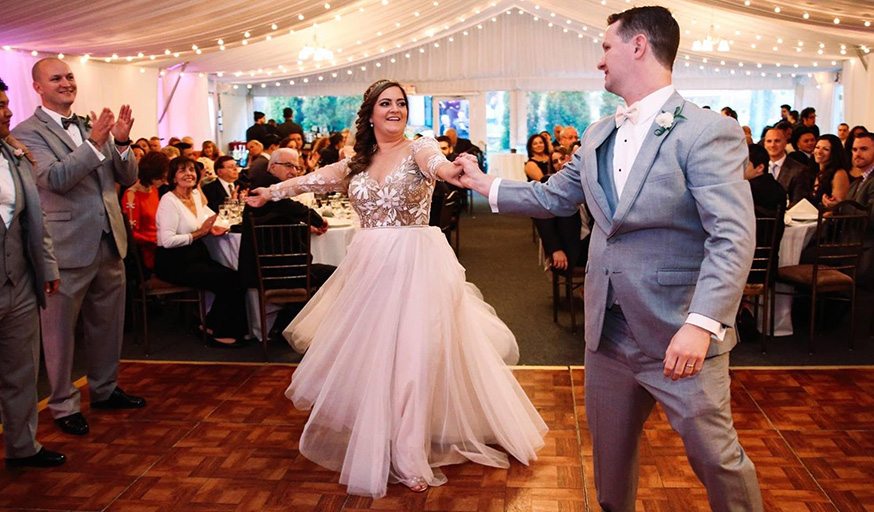
Your wedding first dance is one of the most memorable, highly photographed moments of your entire celebration.
Yet, for many couples, the thought of stepping onto an open floor surrounded by family, friends, and flashing camera lenses induces a wave of stage fright.
The single biggest fear couples express is looking stiff, robotic, or caught in an endless, uninspired “middle school sway”.
If you are worried about stumbling or looking awkward on camera, take a deep breath.
Dancing is not an innate talent reserved for professionals, it is a learnable physical skill built on rhythm, posture, and simple mechanics.
Most wedding floor blunders stem from a few predictable, avoidable habits.
Below, we break down the most common reasons first dances feel awkward and give you exact strategies to fix them so you can step onto the floor with complete confidence.
You don’t need years of dance training or complex choreography to impress your guests. Avoiding simple technical mistakes like floor-staring and rigid posture will make your dance look effortless, natural, and joyful.
Fixing Awkward First Dance Habits
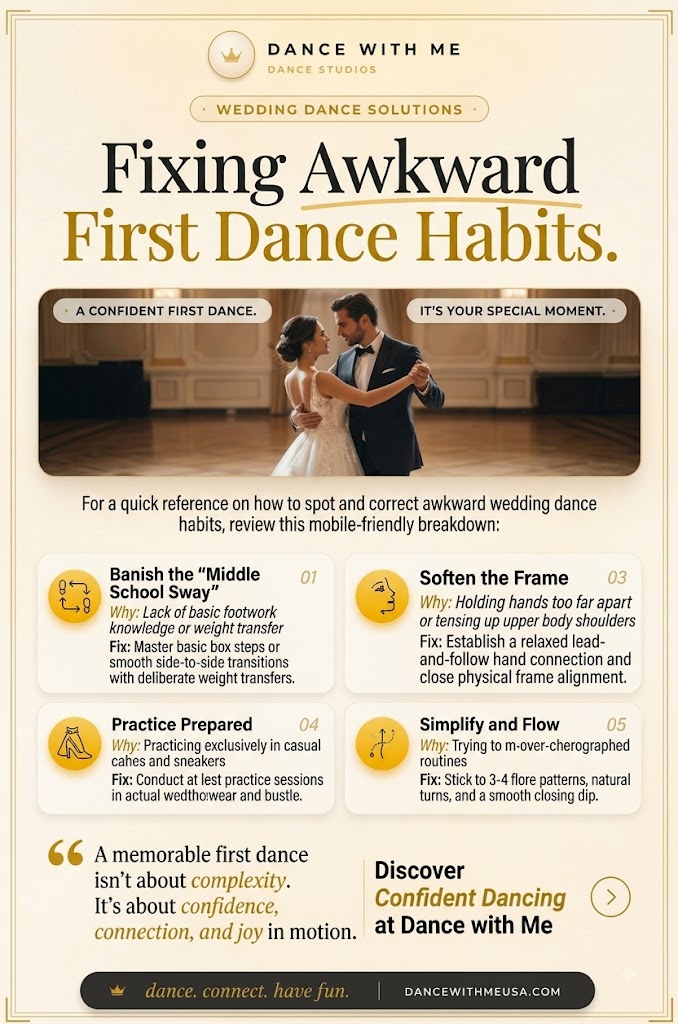
For a quick reference on how to spot and correct awkward wedding dance habits, review this breakdown:
1. The “Middle School Sway”
Why It Happens: Lack of basic footwork knowledge or weight transfer technique
The Professional Fix: Master basic box steps or smooth side-to-side transitions with deliberate weight transfers.
2. Staring Down at Feet
Why It Happens: Nervousness and fear of tripping
The Professional Fix: Lift your chest, keep your chin parallel to the floor, and maintain eye contact with your partner.
3. Stiff, Distance “Robotic” Frame
Why It Happens: Holding hands too far apart or tensing up upper body shoulders
The Professional Fix: Establish a relaxed lead-and-follow hand connection and close physical frame alignment.
4. Tripping on Gown or Shoes
Why It Happens: Practicing exclusively in casual clothes and sneakers
The Professional Fix: Conduct at least two practice sessions in actual wedding footwear and bustle.
5. Panicked Step Counting
Why It Happens: Trying to memorize over-choreographed routines
The Professional Fix: Stick to 3–4 flexible core patterns, natural turns, and a smooth closing dip.
A Deep Dive into Eliminating Awkwardness
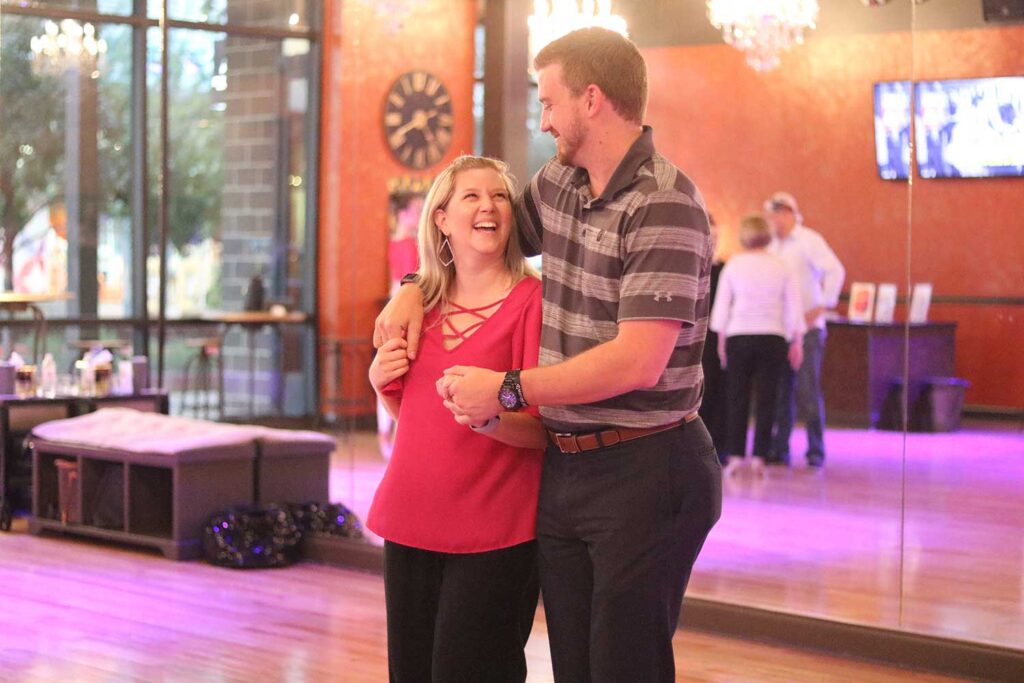
1. Ditch the “Middle School Sway” with Intentional Movement
The classic “middle school sway”, shifting side to side on static feet while clinging to your partner, is the #1 reason first dances look repetitive and awkward.
-
Why It Looks Awkward: Shifting back and forth without shifting weight cleanly or traveling across the floor makes the couple look stuck and unsure of what to do next.
-
How to Fix It: Learn foundational dance mechanics, such as a basic Box Step (ideal for 4/4 timing like Foxtrot or Rumba) or a basic Waltz Box (for 3/4 timing). Learning how to shift weight cleanly from one foot to the other allows you to move gracefully around the floor rather than staying glued to one spot.
2. Lift Your Gaze: Fix the “Floor Watcher” Effect
When dancers feel nervous about their steps, their natural instinct is to drop their eyes to track their feet.
-
Why It Looks Awkward: Staring downward rounds your shoulders, breaks spinal posture, pulls your center of gravity forward, and leads to hunched photos.
-
How to Fix It: Trust your muscle memory. Practice looking at your partner’s right shoulder, neck, or eyes. Keeping your chin parallel to the floor opens up your chest, improves balance, and allows your photographer to capture genuine emotional moments.
3. Establish a Comfortable, Relaxed Frame
Holding your partner at arm’s length or locking your elbows stiffly creates visible physical tension.
-
Why It Looks Awkward: Excessive space between partners breaks the illusion of connection and makes every movement look rigid or forced.
-
How to Fix It: Connect through a proper dance frame. The leader should offer a firm yet relaxed support with their right hand gently placed below the follower’s shoulder blade, while the follower rests their left arm comfortably along the leader’s shoulder. This frame communicates direction effortlessly without requiring you to pull or push.
4. Practice in Your Real Wedding Attire and Shoes
Rehearsing in gym clothes and soft sneakers feels easy in a studio, but your wedding outfit completely changes physical dynamics.
-
Why It Looks Awkward: Heavy dress trains, high heels, slick leather dress shoes, and fitted suit jackets restrict range of motion. Unexpected shoe slip or stepping on a dress hem causes instant panic on stage.
-
How to Fix It: Bring your actual wedding shoes (or pair with identical heel height and sole grip) to your last few practice sessions. Practice with your gown bustle attached or wear a floor-length practice skirt so you learn how to navigate turns without stepping on fabric.
5. Prioritize Natural Flow Over Complex Choreography
Attempting a viral, intricate routine with non-stop acrobatics or rigid counting often leads to visible panic if someone misses a beat.
-
Why It Looks Awkward: When couples spend the entire song silently counting “1-2-3-4” in their heads, their facial expressions become blank and mechanical (“The Zombie Routine”).
-
How to Fix It: Focus on mastering 3 or 4 simple, flexible patterns, a smooth underarm turn, and a picture-perfect final dip. Knowing how to transition naturally between basic steps gives you room to breathe, smile, and enjoy the song.
Group Dance Classes vs. Private Lessons for First Dance Prep
Choosing the right environment is crucial to feeling comfortable and eliminating first dance awkwardness:
-
Private Wedding Dance Lessons: The premier choice for engaged couples. Private coaching provides 1-on-1 instruction tailored to your specific song tempo, dress constraints, physical height differences, and comfort level.
-
Group Dance Classes: Ideal for building general coordination, rhythm, and confidence moving in front of others.
-
The Hybrid Strategy: Many couples use private lessons to build their custom first dance routine, supplemented by beginner group classes to practice navigating around others on a busy floor.
We’ll make your first dance unforgettable
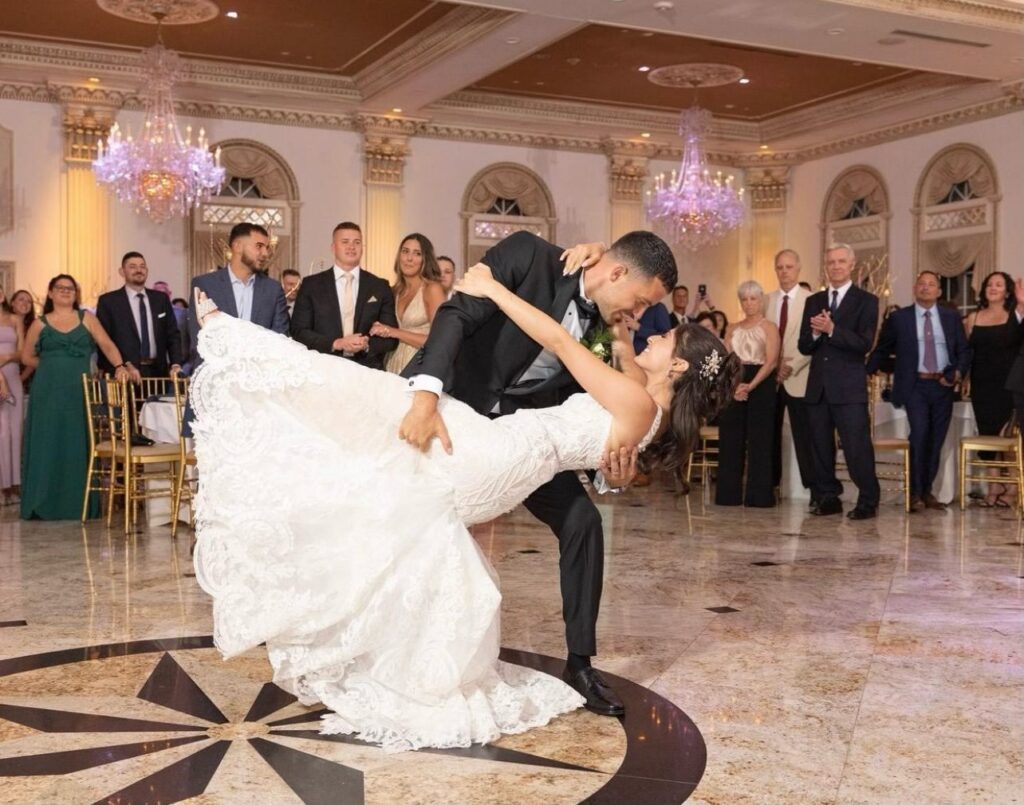
Your first dance should be one of the most romantic, joyful highlights of your wedding, not a source of dread. ]
By starting early, practicing in your shoes, and focusing on basic posture and frame mechanics, you can banish awkwardness and step into the spotlight with total ease.
Frequently Asked Questions (FAQ)
What makes a first dance look awkward?
A first dance usually looks awkward due to stiff posture, floor-staring, extreme physical distance between partners, or relying entirely on an unvaried side-to-side “middle school sway” without clean footwork.
How can we stop doing the “middle school sway” at our wedding?
To eliminate the middle-school sway, learn basic lead-and-follow footwork patterns (such as a 4-count box step or smooth box waltz) and practice clean weight transfers from foot to foot.
How long should our first dance song be to avoid looking repetitive?
The ideal duration for a first dance is between 2 to 3 minutes. Anything longer can feel tiring for the couple and lose the audience’s attention. A dance instructor can easily edit your track to fade out naturally.
What if my partner has “two left feet” or no rhythm?
Having “two left feet” is simply a lack of structured physical coordination, which is easily corrected with proper guidance. Instructors break down music downbeats into simple steps, helping even absolute beginners feel comfortable within 2 to 3 lessons.
When should we start taking lessons to look natural on the floor?
The ideal timeline is starting 3 to 4 months before your wedding date (4 to 8 private lessons). This gives your muscle memory time to absorb steps naturally so you don’t look rushed or stiff.